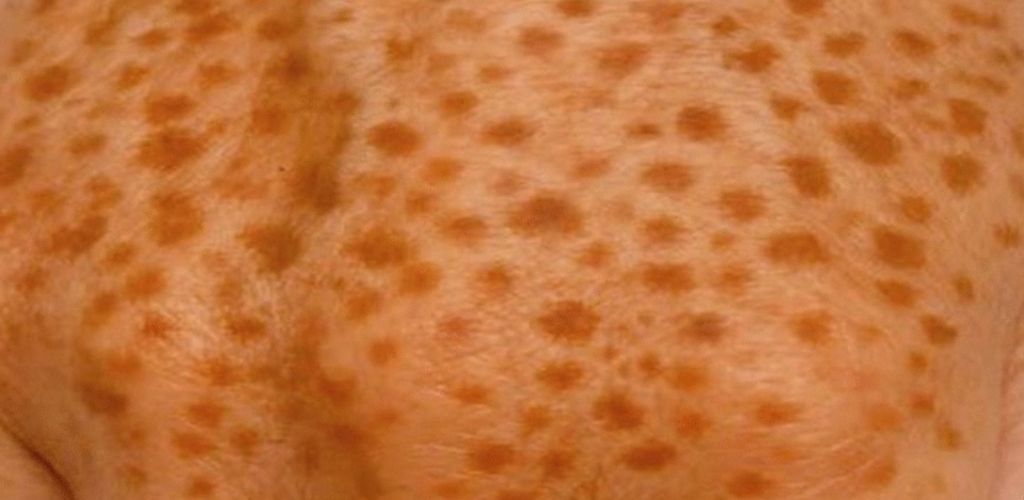
Brown spots on the skin are extremely common, especially in areas that are frequently exposed to the sun, such as the arms, face, forearms, and hands.
While most of these spots are harmless, some can be early signs of a more serious condition, such as skin cancer.
Understanding the differences between freckles, age spots, and potentially dangerous skin lesions is important for your health and peace of mind.
Pegi (Ephelids)
Freckles are small, flat, light or dark brown spots that usually appear on sun-exposed areas of the skin, especially in fair-skinned people. They are usually genetic and may become more pronounced with sun exposure, but fade in the winter months. Freckles are not harmful nor do they pose a cancer risk.
Key Features:
They usually appear in childhood or adolescence.
Small (1–2 mm), flat, and uniform in color.
They darken in the sun and fade in low light.
Most commonly seen on the face, hands, and upper back.
Pigmented spots (liver spots or solar lentigo)
How to treat hyperpigmentation, age spots, and melanoma
Pigmentation spots, also known as liver spots or sun spots, are flat, brown, gray, or black spots that usually appear in middle-aged and older people. They are caused by prolonged sun exposure over many years and are considered a natural factor.
Main characteristics:
They usually appear after age 40.
Flat, oval, and with clearly defined borders.
The size varies from a few millimeters to more than a centimeter.
They most often appear on the hands, face, forearms, and chest.
Harmless and noncancerous
Although age spots don’t require treatment, some people choose to remove them for cosmetic reasons using laser therapy, chemical peels, or topical lightening creams.
Skin cancer (melanoma and non-melanoma)
Although most brown spots are benign, some can be early signs of skin cancer, especially melanoma, the most serious form. It’s important to be alert to suspicious skin changes and use the ABCDE rule to detect possible melanomas:
Asymmetry: One half doesn’t fit into the other
Border: Irregular, wavy, or poorly defined edges
Color: Variable color (brown, black, light brown, sometimes red, white, or blue)
Diameter: More than 6 mm (about the size of a pencil eraser)
Progression: Changes in size, shape, color, or symptoms (itching, bleeding)
Other telltale signs include a wound that won’t heal, a mole that looks different from others (known as the “ugly duckling symptom”), or rapid growth in a previously stable area.
When to see a dermatologist
If you notice any new, changing, or unusual spots on your skin, it’s best to see a dermatologist. Regular self-examinations and annual skin checks are especially important if you have a history of sunburns, tanning bed use, or a family history of skin cancer.
Conclusions
Freckles and age spots are usually harmless and a natural part of aging or sun exposure. However, being vigilant and recognizing the warning signs of skin cancer can save your life. If you have any doubts, get screened: early detection is the best defense.