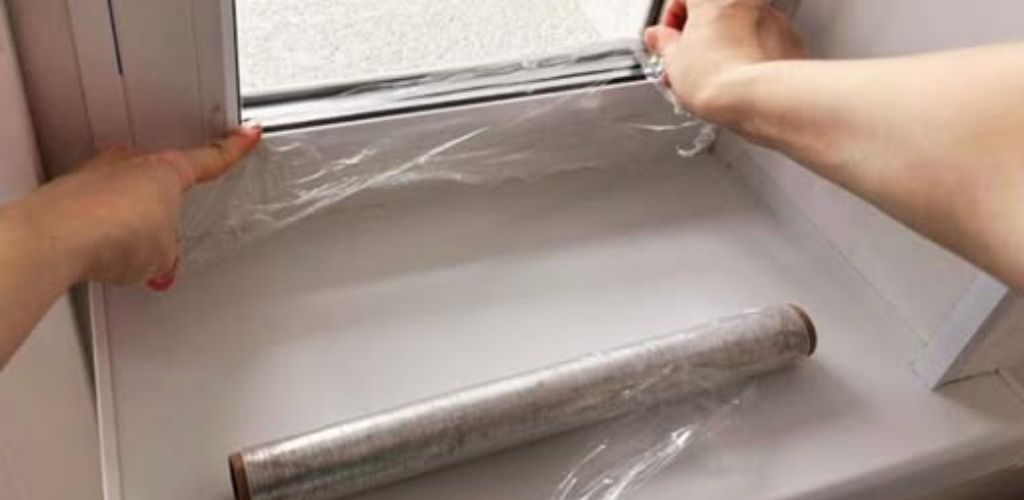
You stick cling film (or special insulation film) on your windows because it serves as temporary and inexpensive thermal insulation in winter.
The main reason is that the film creates an additional, thin layer of air between the actual window pane and the room air.
The three main reasons for cling film on windows:
- Reducing heat loss (thermal insulation)
Air cushion effect: The film captures a small portion of the warm room air and prevents it from directly reaching the cold pane and releasing its heat there.
Improved U-value: Although cling film isn’t comparable to professional insulation films, this additional layer reduces the window’s thermal transmittance (U-value). This means less heat escapes to the outside. This saves on heating costs. - Prevention of cold sensations (drafts)
Surface temperature: The film makes the inside of the window pane feel slightly warmer.
Convection: The film reduces cold air convection. This is the effect in which the air cools against the cold pane, sinks downwards, and creates an unpleasant “draft” in the room. - Reduction of condensation
Higher temperature: Because the film slightly increases the temperature of the window surface, the condensation point (the point at which moisture condenses as water) is reached less frequently.
Protection against mold: Less condensation means less moisture in the window seals and frame, which reduces the risk of mold growth.
In summary: The film is a quick and very inexpensive DIY measure to provide additional insulation in winter, especially for older or single-glazed windows, and to increase living comfort. Professional, transparent, stretched shrink films for windows (cold protection films) work on the same principle, but offer significantly better insulation performance and aesthetics.