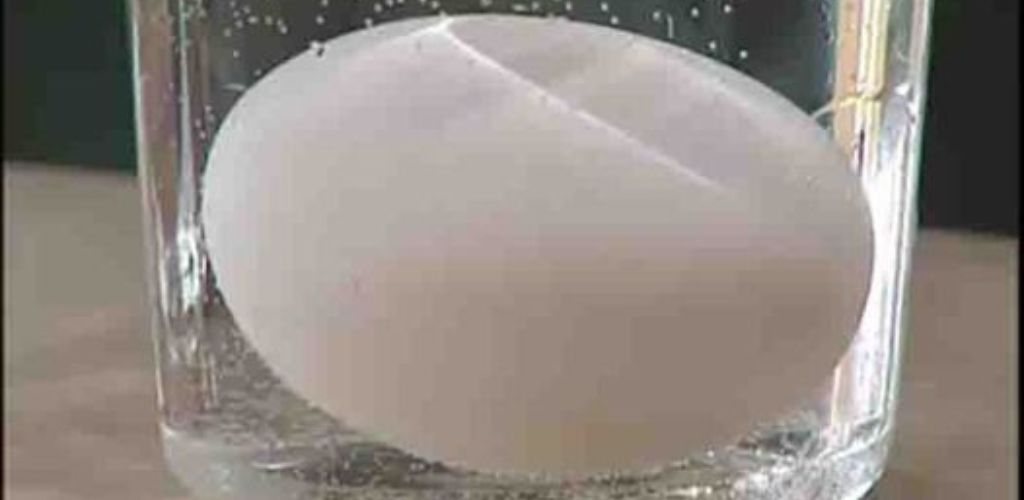
There are several simple and reliable methods to check the freshness of eggs without having to crack them:
- The Water Test (Float Test)
This is the most well-known and reliable method, as it checks the size of the air pocket inside the egg.
Result in Water Significance for Freshness
Stays flat on the bottom: Very fresh (a few days old). Can be eaten raw without concern.
Stands easily: Fresh (approx. 1-2 weeks old). Still very good, can be used raw or cooked.
Stands upright: Older (approx. 2-3 weeks old). Best used only after thorough heating (baking, cooking).
Floats to the surface: Spoiled (usually older than 4 weeks). Do not eat! The large air pocket indicates decomposition.
Background: Over time, liquid evaporates through the porous shell, and air enters. The air chamber at the blunt end of the egg thus expands, giving the egg buoyancy.
- The Shake Test (Auditory Test)
Hold the egg close to your ear and shake it gently.
Fresh: You will hear no sound or only a very faint, firm sound, as the contents (egg white and yolk) are still solid.
Old/Spoiled: You will hear a distinct gurgling or sloshing sound. The egg white has become more watery and is moving around a lot in the shell.
- The Crack Test (Visual Inspection)
If you have to crack the egg, look for the following characteristics on a flat plate:
Fresh:
The yolk is highly domed and does not crack.
The egg white is thick, fits tightly around the yolk, and does not run immediately.
Old:
The yolk is flat and runs easily.
The egg white is watery and immediately spreads over a large area.
Important: Regardless of the test results, if an egg smells rotten or sulfurous when cracked, discard it immediately. This smell is the final and definitive sign that the egg is spoiled.