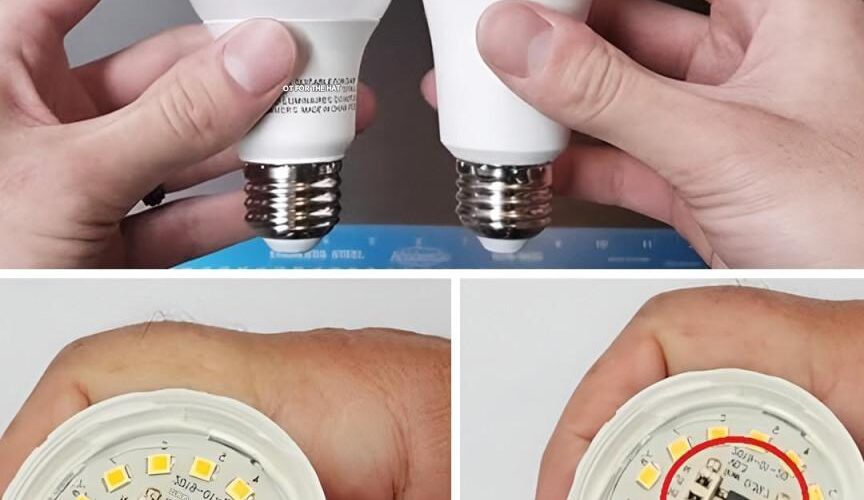
That’s an appealing thought, but the claim that an LED lamp will last “a lifetime” with one trick is an exaggeration often found in clickbait. While LEDs are highly durable, no electronic component lasts forever.
However, you can significantly extend the lifespan of your LED lamps by addressing their main point of failure: the heat generated by the driver electronics and the LED chip itself.
The “trick” isn’t magic, but rather smart usage and proper installation to manage heat and electrical stress. Here are the most effective ways to make your LEDs last as long as possible:
1. Ensure Proper Ventilation (The Core “Trick”)
The most common reason for LED failure isn’t the light-emitting diode itself, but the internal power supply (driver) breaking down due to excessive heat.
- Avoid fully enclosed fixtures: Do not install standard consumer LED bulbs in completely sealed light fixtures. The trapped heat prevents the internal heat sink from cooling the components, severely shortening the lamp’s life.
- Use designated bulbs: If you must use a sealed fixture, look for LED bulbs specifically labeled “suitable for enclosed fixtures” (or similar wording). These bulbs have higher-temperature-rated components and better thermal management.
- Check the base: Ensure the heat sink (often the metal or thick plastic base of the bulb) is exposed to air whenever possible.
2. Reduce Electrical Stress
The electronics suffer most when operating under stress. Reducing this stress increases longevity.
- Avoid cheap drivers: Lower-cost LED bulbs often use cheap drivers that poorly manage current fluctuations and heat. Investing in high-quality, name-brand LED bulbs usually means getting a better, more robust driver.
- Use compatible dimmers: If you use a dimmer switch, make sure it is LED-compatible. Using an old, incandescent-only dimmer can cause the LED driver to flicker, overheat, and fail prematurely due to electrical stress.
3. Limit Operating Hours (Practical Tip)
While LEDs are far more durable than traditional bulbs, running them 24/7 will inevitably shorten their life.
- Turn them off: Unlike fluorescent lights, LEDs are not damaged by frequent switching. Turn off LED lights when leaving a room to minimize the total amount of stress and operational heat they endure.
By minimizing the operating temperature—especially by avoiding enclosed fixtures—you address the number one cause of early LED failure and get the longest possible service life from your bulbs!