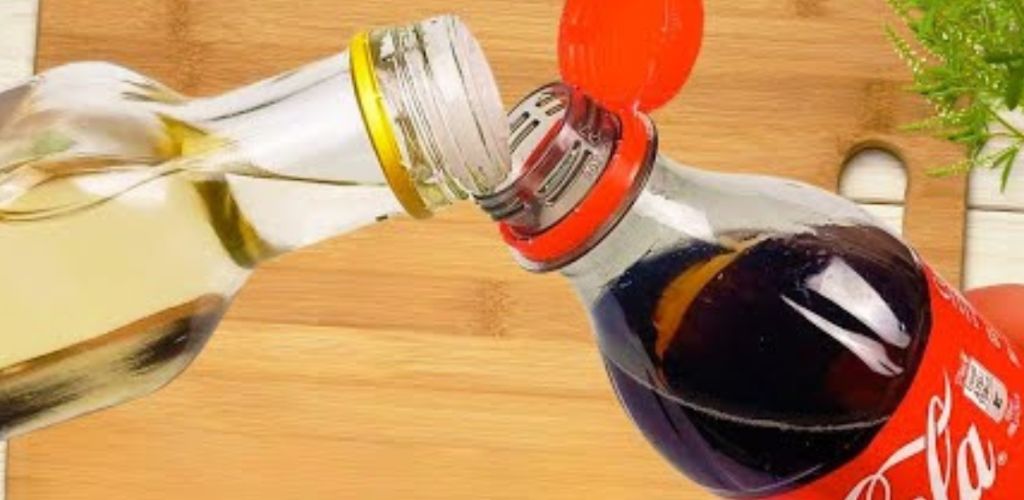
The combination of white vinegar and Coca-Cola is a popular secret in the world of home remedies and is primarily used to combat stubborn dirt and deposits in the home.
The “miracles” of this mixture are based on the combined action of two powerful acids: acetic acid (in vinegar) and phosphoric acid and carbonic acid (in cola).
The Synergy of Acids: Limescale, Urine Scale, and Rust
Both vinegar and cola are acidic liquids that are excellent at dissolving inorganic and mineral deposits. Mixing both products enhances this effect; a little baking soda is often added to create a mechanical cleaning effect through the strong foaming action.
- Stubborn Toilet Cleaning (Limescale and Urine Scale)
This is the most common and effective application of the mixture.
Advantage: Limescale and urine scale deposits in the toilet (especially under the rim or on the floor) are mineral compounds that are dissolved by the acids in vinegar and cola. The acetic acid is a proven limescale remover, while the phosphoric acid in the cola supports this process.
Application: Use the toilet brush to push the water out of the toilet bowl as far as possible. Then pour in cola (about a can or more) and a dash of vinegar essence. It’s best to let the mixture work overnight before scrubbing and flushing. The long contact time is crucial.
- Rust Removal
The combination of acids makes the mixture a good rust remover for small objects.
Advantage: The acids react with the iron oxide (rust) and convert it into water-soluble compounds, making it easy to rub off. The phosphoric acid in the cola can even form a temporary phosphate layer that temporarily protects the object from further rust.
Application: Rusted tools, screws, or coins can be soaked in a bowl containing the vinegar-cola mixture. Leave the objects for a few hours or overnight, and then scrub off the dissolved rust.
- Drain Cleaning (Clogs)
The vinegar-cola combination is also used to clear light to moderate drain blockages, often with the addition of baking soda.
Advantage: Vinegar and cola help attack limescale and grease deposits in the pipe. It is especially effective with the addition of baking soda. The chemical reaction of vinegar and baking soda produces strong fizzing (carbon dioxide), which mechanically loosens stubborn dirt.
Application (with baking soda): First, pour a few tablespoons of baking soda into the drain, followed by the vinegar and cola mixture. Once the fizzing subsides, rinse with hot water.
Conclusion and Precautions
Using vinegar and cola as a cleaner is a cost-effective and chemical-reducing household remedy.
Important to note:
Vinegar and delicate materials: Be careful when using pure vinegar on rubber seals, silicone seals, and natural stone, as the acid can permanently damage these materials.
Sugar in cola: Cola contains sugar, which can leave a sticky residue. Therefore, surfaces should always be thoroughly rinsed with clean water after use.
Not a substitute for specialty cleaners: Although the mixture works well on limescale and rust, its cleaning effect is generally weaker than that of industrial-grade specialty cleaners for the most stubborn problems.