Absolutely! Knowing your blood type is vital in some situations and is part of common medical knowledge. It goes far beyond A, B, AB, and O.
Here are 10 important facts everyone should know about their blood type:
The 10 most important facts about our blood type
- Blood type is crucial for transfusions
Blood type describes special antigens (surface structures) on your red blood cells. If a patient receives blood with “foreign” antigens during a transfusion, the body’s own antibodies attack the donor blood. This leads to clumping (agglutination) and can trigger life-threatening complications. - The two most important systems are ABO and Rhesus
Your complete blood type designation consists of two parts:
ABO system: A, B, AB, or O (zero). This system is the most important for compatibility.
Rhesus system: Positive (+) or Negative (−). This is determined by the Rhesus antigen D.
- Blood group O- is the universal donor (for red blood cells)
People with blood group O, Rhesus negative (O−), have neither A, B, nor Rhesus antigens. Their red blood can therefore be transfused to virtually anyone in an emergency, as it is not attacked by antibodies. - Blood group AB+ is the universal recipient (for red blood cells)
People with blood group AB, Rhesus positive (AB+), have all three important antigens (A, B, and Rhesus). They therefore do not produce antibodies against A, B, or Rhesus. They can therefore receive blood from any ABO and Rhesus group. - Blood plasma has reverse universal compatibility.
While O- is the universal donor for red blood cells, AB plasma is the universal donor for blood plasma. Plasma from AB donors contains no antibodies and can therefore be transfused to any patient. - Blood type is inherited dominantly.
Your blood type is genetically determined and cannot change over the course of your life. The A and B traits are dominant over O. A child inherits one trait from each parent. - A and O are the most common blood types in Germany.
In Germany and Central Europe, blood types A and O are the most common.
A: approx. 43%
O: approx. 41%
B: approx. 11%
AB: approx. 5% (AB− is the rarest group at approx. 1%)
- Rh negativity is relevant during pregnancy
If a Rh negative (Rh-) mother is pregnant with a Rh positive (Rh+) child, her immune system can produce antibodies against the child’s blood in the event of a blood exchange. This can lead to life-threatening complications for the baby in subsequent Rh+ pregnancies. Rh prophylaxis can now reliably prevent this. - Blood type has no influence on character
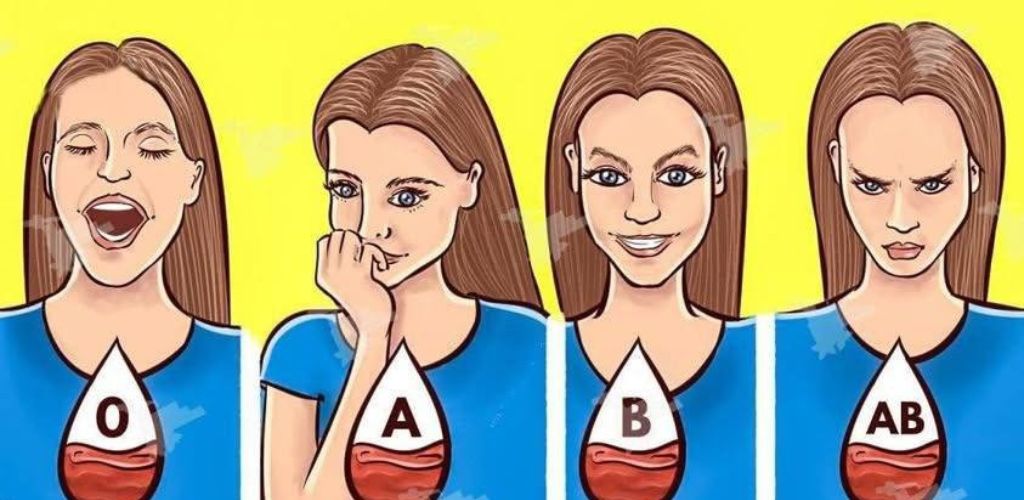
Despite popular myths (especially in Japan), there is no scientific basis for suggesting that your blood type influences your character, intelligence, or personality. - Blood types can influence disease risk
Although your blood type does not determine the success of a diet (see the “Blood Type Diet” myth), there is evidence of a connection with certain diseases:
People with blood type O are said to be less likely to develop cardiovascular disease, but are more prone to stomach problems or stomach ulcers.
People with blood type A tend to have a higher risk of severe cases of certain viral infections (e.g., COVID-19) and have higher concentrations of clotting factors.
Important: If you don’t know your blood type, you can have it determined free of charge when you donate blood or ask your family doctor for it. Always carry this information with you in case of emergency (e.g., in your blood donor card or maternity record)!