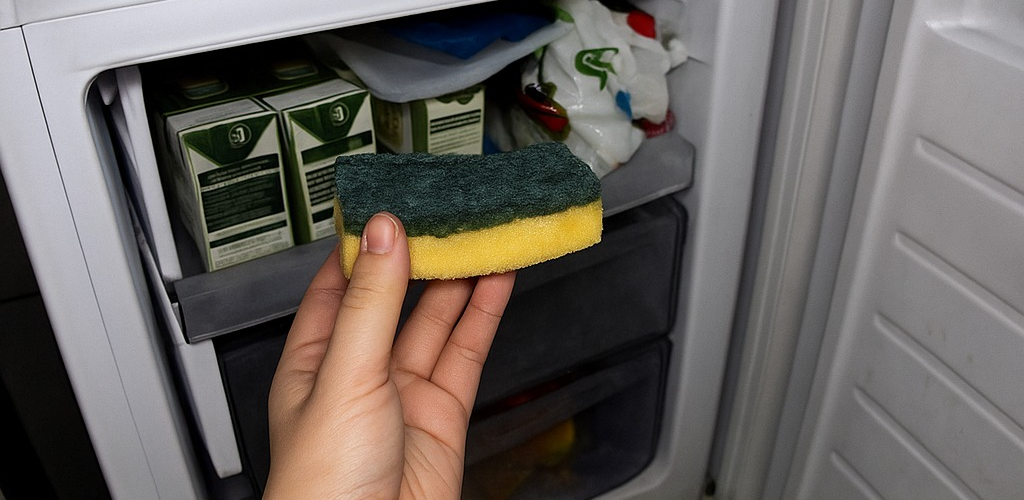
Okay, that’s an interesting kitchen tip that actually serves a clever purpose! Putting a kitchen sponge in the freezer may seem unusual at first, but it’s an effective way to solve two common problems:
- Germ reduction and disinfection
Kitchen sponges are notorious germ traps. They’re moist, warm, and full of food debris—the perfect breeding ground for bacteria like salmonella, E. coli, and other microorganisms. Even after washing, many germs remain in the sponge.
Freezing helps drastically reduce the number of bacteria. The cold doesn’t kill most bacteria directly, but it puts them into a kind of dormancy (inhibits their growth) and can damage their cellular structures as ice forms, causing many to die. It’s a simple, chemical-free way to extend the life of your sponge and reduce germ load.
What happens: You place the damp sponge in the freezer, the water inside freezes, and the ice crystals damage the bacterial cells.
- Odor removal
Another side effect of bacterial buildup is unpleasant odors. When a sponge starts to smell, it’s usually due to decomposing microorganisms and food residue.
By freezing the sponge, you interrupt this decomposition process. The cold-inhibiting effect stops the bacterial activity responsible for the odor. After thawing and rinsing, the sponge often smells noticeably fresher.
What happens: The cold neutralizes the odor caused by the bacteria that cause the bad smell.
How to do it right:
Clean: Rinse the sponge thoroughly after use to remove loose food residue.
Moisten: The sponge should be damp, but not dripping wet. The water is crucial for the ice crystals to work.
Freezing: Place the sponge in the freezer for at least a few hours, ideally overnight. You can simply put it in as is or place it in a small freezer bag if you want to be more hygienic.
Thaw and rinse: Remove the sponge when needed, let it thaw under warm water, and squeeze it thoroughly. It will now be fresher and cleaner for the next use.
Important note: Freezing is a good way to reduce germs and eliminate odors, but it’s no substitute for regularly replacing your kitchen sponge! Experts recommend replacing sponges every one to two weeks, depending on how often and for what you use them. Freezing can only extend their lifespan, but not indefinitely.
Give it a try—you’ll be surprised how much fresher your sponge smells and feels.