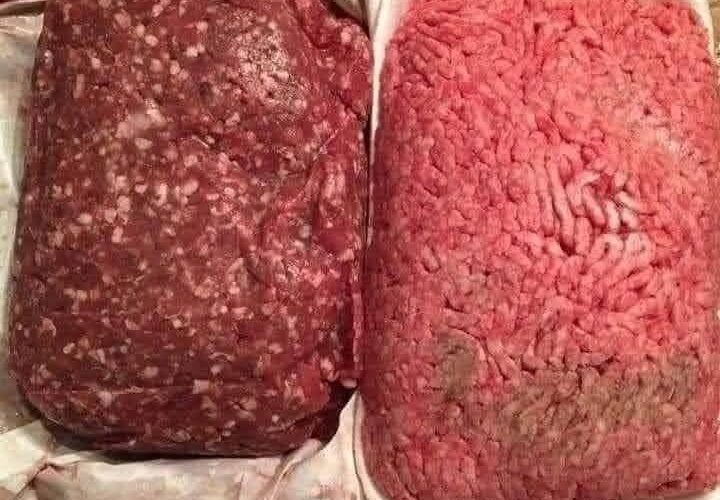
Behind the sensational advertising promises lie tricks of the meat industry: meat enhancement, weight gain, and packaging manipulation. This is how the weight or appearance of a seemingly fresh product is altered.
The most common tricks of the meat industry
Water injection (weight gain): Pork and poultry are injected with phosphate-containing brine. This increases the product’s weight by up to 15–30%. When frying, this liquid runs into the pan, causing the meat to boil instead of fry and shrink to half its size.
“Meat glue” enzyme (transglutaminase): This enzyme binds smaller and cheaper pieces of meat together, forming them into uniform slices (like steaks, which appear to have a high-quality texture). After cooking, the cut surface or the unusual grain direction may indicate that it is not a single, continuous muscle.
Modified atmosphere packaging (MAP): A gas mixture with a high oxygen or carbon monoxide content prevents the myoglobin from browning. This keeps the meat bright red for weeks, even if it’s no longer perfectly fresh.
Pickling and mincing: Cod nearing its expiration date or that has discolored is often pickled in a strongly seasoned marinade or minced to mask its odor and appearance.
How to identify the right product when buying:
Read the label: Fresh cod should only contain meat as an ingredient. If ingredients like “water,” “salt,” or “stabilizers” are listed, it’s a processed meat product.
Under the packaging: If the absorbent pad at the bottom of the tray is floating in the water, the meat inside has already absorbed liquid.