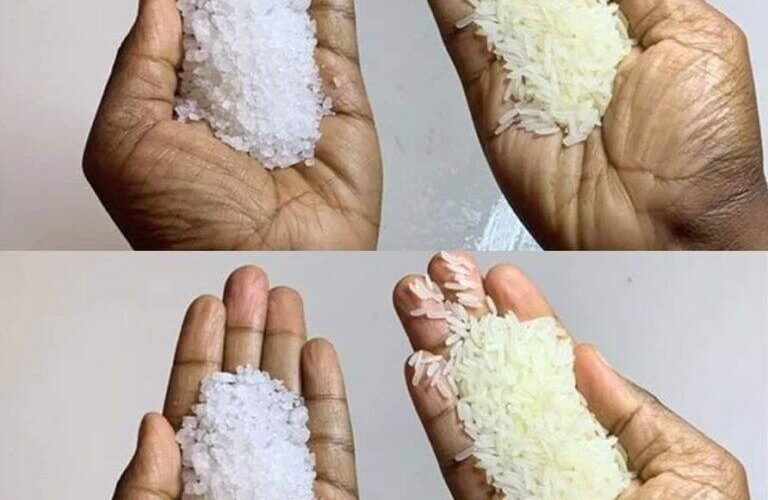
Avoid moisture in the salt shaker or container. This is a common problem, especially in humid climates, where salt can clump together and make it difficult to pour.
The Secret: How It Works
The secret is to add a few grains of uncooked rice (usually just 5 to 10 grains, depending on the size of your salt shaker) directly to the salt container.
Here’s why it works:
Rice is a natural desiccant: uncooked rice is hygroscopic, meaning it easily absorbs moisture from the air. When added to the salt shaker, the rice grains act like tiny sponges, absorbing the moisture that tries to clump the salt.
Prevents Clumping: By absorbing excess moisture, the rice prevents the salt crystals from sticking together, ensuring the salt remains free-flowing and easy to use, even on the most humid days.
Why “No One Will Tell You”?
The phrase “a secret no one will tell you” is often used on social media or in viral content to highlight simple yet effective tricks that are little-known or considered “old wives’ tales.” In this case, it’s a very old and well-established trick that grandmothers and experienced cooks have likely used for generations, but it may not be explicitly taught in modern cooking classes. It’s a bit of culinary wisdom passed down through generations.
How to use it:
Get a clean, dry salt shaker or container.
Add your salt.
Add 5 to 10 grains of plain, uncooked white rice. Avoid flavored or precooked rice, as it may affect the flavor of the salt or not absorb moisture as effectively.
Gently shake to mix the rice with the salt.
Use the salt as usual. The rice grains are small enough not to interfere with pouring and will settle to the bottom as the salt is used. You can replace the rice every few months or when refilling your salt shaker.
This simple trick can save you from the frustration of lumpy salt and is a testament to the effectiveness of traditional cooking wisdom!
Do you know any other old-fashioned cooking tricks you always use?