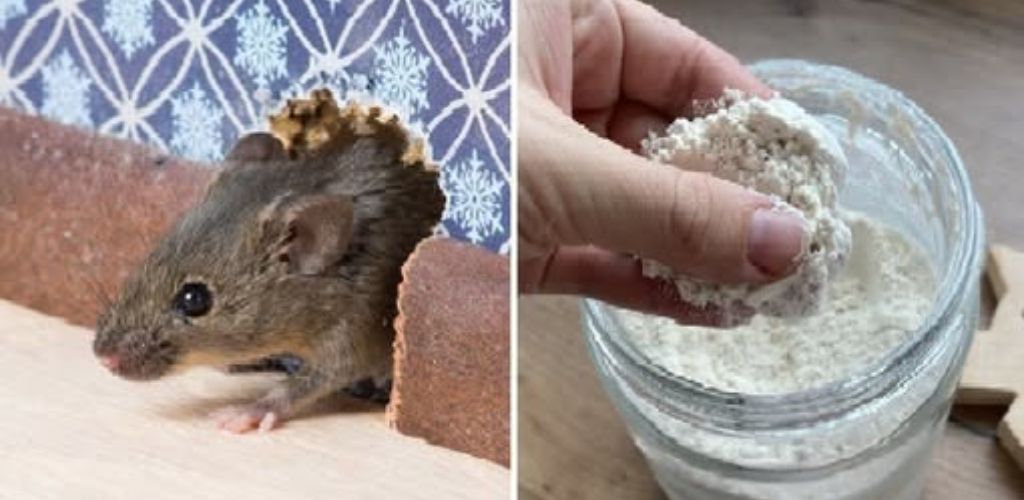
No more rat and mouse problems! 🐭 Here’s how to get rid of them with regular toothpaste.
The claim that you can get rid of rats and mice with regular toothpaste is a common myth and not scientifically proven. There is no solid evidence that toothpaste works as a pest control agent against rodents.
These “insider tips” often spread quickly online, but they are often ineffective and, in the worst-case scenario, can lead to the spread of a serious pest problem if effective measures are not taken.
Why the toothpaste method probably won’t work:
No toxic effect: The ingredients in toothpaste (such as fluoride, abrasives, and flavorings) are not toxic to rodents in the small amounts they can ingest. Rats and mice are very resistant. Questionable repellency: Although toothpaste has a strong odor (usually mint) that may be unfamiliar to rodents at first, they quickly become accustomed to it or simply avoid the area. A short-term “deterrent” is unlikely, and permanent repulsion is impossible.
No attractant: Toothpaste is not bait. Rats and mice will not be attracted to it and will eat it, even if it is theoretically harmful.
Delaying problem resolution: Relying on an ineffective method wastes valuable time, during which the rodent population can multiply exponentially.
What REALLY helps solve rat and mouse problems:
Instead of relying on ineffective home remedies, you should use proven methods to control and prevent rodents:
Hygiene is key:
No food sources: Store food in airtight glass or metal containers. Do not leave food scraps lying around. Empty the trash can regularly and keep it closed.
Cleaning: Keep the kitchen and pantries clean and free of crumbs.
Block access routes (caulking):
Find small cracks: Mice can fit through cracks as small as 6 mm (the diameter of a pencil), while rats can fit through openings as small as 2 cm.
Caulking: Seal all cracks and holes in walls, foundations, and around pipes and cables with steel wool (they can’t chew through them), cement, putty, or fine wire mesh. Also check door and window seals.
Setting traps (mechanical methods):
Live traps: For those who don’t want to kill the animals. Important: Animals must be released at an appropriate distance (at least 2 to 3 km) in a suitable environment, otherwise they will return.
Snap traps: A humane and quick method, if installed correctly. Use attractive baits, such as peanut butter, Nutella, bacon, or raisins.
Regular monitoring: Check traps daily.
Professional help:
In case of a large infestation or if your own measures don’t work, you should definitely call a professional pest control company. They have access to more effective methods and are familiar with animal behavior, helping to permanently resolve the problem.
Natural (indirect) predators:
If you live in a rural area, having cats or even birds of prey on your property can help keep the population under control. However, this is not an internal control method.
Don’t rely on toothpaste or similar myths. Instead, invest in proven prevention and control methods to keep your home truly rodent-free