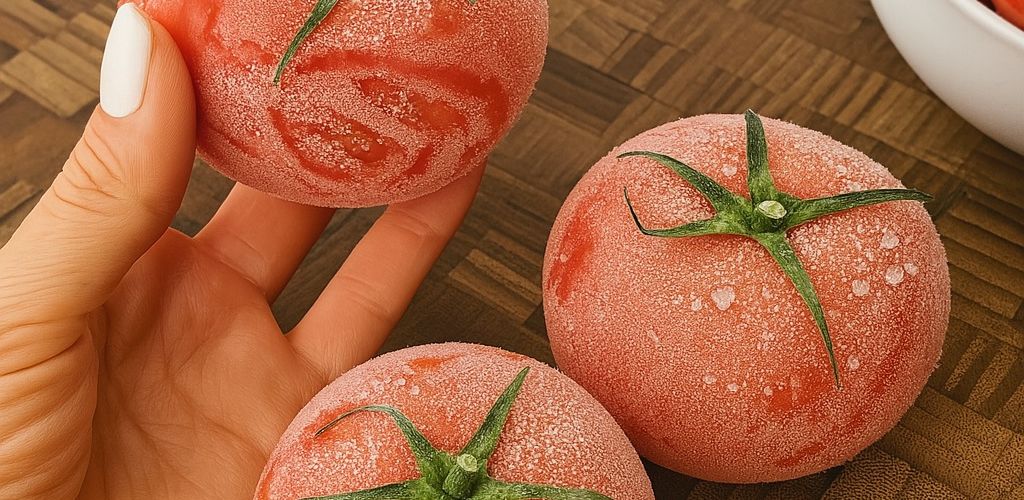
Flavor: Frozen tomatoes harvested at peak ripeness retain their intense, fresh flavor much better than unripe tomatoes that end up in cans or jars.
Cost savings: Buy tomatoes in bulk when they’re in season and inexpensive.
Flexibility: You’ll always have fresh tomatoes on hand without having to go shopping.
Versatility: Frozen tomatoes are great for sauces, soups, stews, or casseroles.
How to freeze tomatoes – The best way:
The key to successfully freezing tomatoes is blanching and then peeling them. This not only prevents ice crystals from forming and loss of flavor, but also makes the tomatoes ready to use immediately after thawing.
Step-by-Step Instructions:
Select Tomatoes:
Choose ripe, firm tomatoes without bruises. Beefsteak or Roma tomatoes (plum tomatoes) are particularly good because they are less watery.
Prepare:
Wash the tomatoes thoroughly.
Remove the stems.
Blanch:
Bring a large pot of water to a boil.
Prepare a large bowl of ice water.
Lightly score the bottom of each tomato in a cross shape (this will help with peeling later).
Carefully place the tomatoes in the boiling water for 30-60 seconds. The skin should peel easily and burst open.
Remove the tomatoes with a slotted spoon and immediately immerse them in the ice water. This stops the cooking process and makes peeling easier.
Peel:
Once the tomatoes are cool enough to handle, gently peel off the skin. It should peel easily.
Chop (optional, but recommended):
You can leave the peeled tomatoes whole, but for most applications, it’s more convenient to chop them.
Cut them into quarters, halves, or large chunks. If you want a smooth sauce, you can also puree them.
Freezing – The “Flash Freeze” Trick:
Place the prepared tomato chunks (or whole peeled tomatoes) in a single layer on a baking sheet lined with parchment paper. Make sure they aren’t touching.
Place the baking sheet in the freezer for 1-2 hours, until the tomatoes are solidly frozen. This will prevent them from sticking together in the freezer bag later.
Packing:
Transfer the flash-frozen tomatoes into freezer-safe bags or airtight containers.
Label the containers with the date and contents.
Remove as much air as possible from the bags (vacuum sealing is ideal if you have the option) to prevent freezer burn.
Storage:
Frozen tomatoes will keep in the freezer for about 8-12 months when prepared this way.
How to use frozen tomatoes:
Use them straight away: You don’t need to thaw the tomatoes if you’re using them in cooked dishes like soups, stews, curries, or sauces. Simply add them frozen to the pot. They will disintegrate during cooking.
For salads or sandwiches: They’re less suitable for these, as their texture softens after thawing and is no longer ideal for raw dishes.
Freezing tomatoes this way does require a little extra effort, but the difference in taste and texture after thawing is absolutely worth it. Give it a try!
What’s your favorite vegetable to freeze for later use?