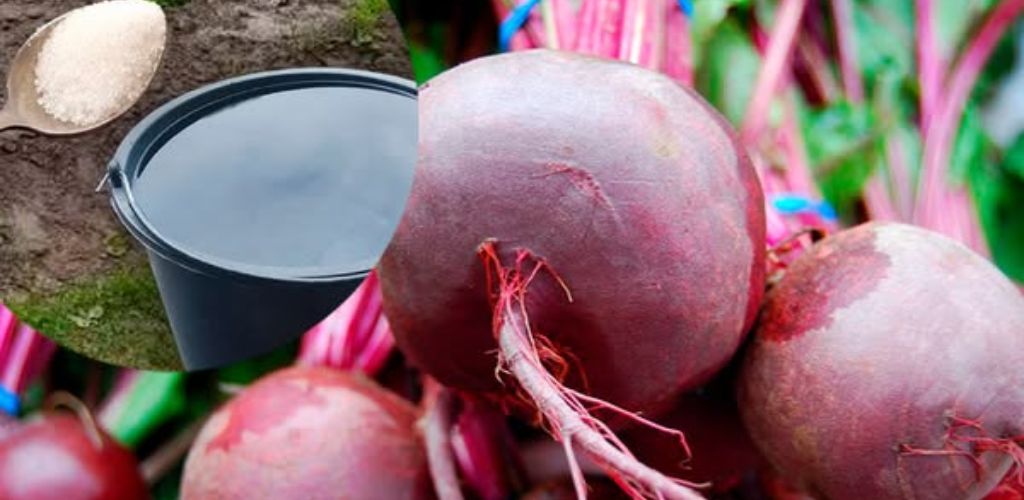
Summer is in full swing, and July is a crucial month for beetroot growers. Right now, not only the volume of the roots is being formed, but also their taste – and it can be either bland or sweet as honey.
If you want to have a harvest in the fall that will please you not only with its size, but also with its taste, I have a proven, purely natural recipe for you.
🥄 What do I add to the water?
My proven recipe for sweet beets consists of a mixture of potassium and magnesium – more precisely, in the use of potassium monophosphate and magnesium sulfate. Both substances are completely safe, easily available in gardening and support not only the formation of sugars, but also healthy plant growth.
✅ Potassium monophosphate – sweetness and strength
Contains up to 34% potassium and 52% phosphorus
Potassium increases the content of natural sugars, improves taste and disease resistance
Phosphorus supports the development of the root system and overall maturation
🧪 Dosage: 2 teaspoons per 10 liters of water
✅ Magnesium sulfate – green leaves and strong photosynthesis
Rich in magnesium and sulfur
Helps the plant better process potassium and phosphorus
Ensures proper leaf coloration and vitality
🧪 Dosage: 2 teaspoons per 10 liters of water
💧 How to apply correctly?
The day before, water the bed well with clean water
Apply fertilizer directly to the roots, not to the leaves
Consumption: approx. 10 liters of solution per 2 m²
📅 When is the last time to fertilize?
By mid-July at the latest. After that, we just water the plants and let nature complete its magic.
🍽 Results?
The beets will not only be bigger and juicier, but also significantly sweeter, which you will notice with every bite. And the best part is – no chemicals, just the power of nature.
Try it and let me know how it tasted! 🌱
If you also have your own tip for natural fertilization, share it – the garden is a place where it pays to share.