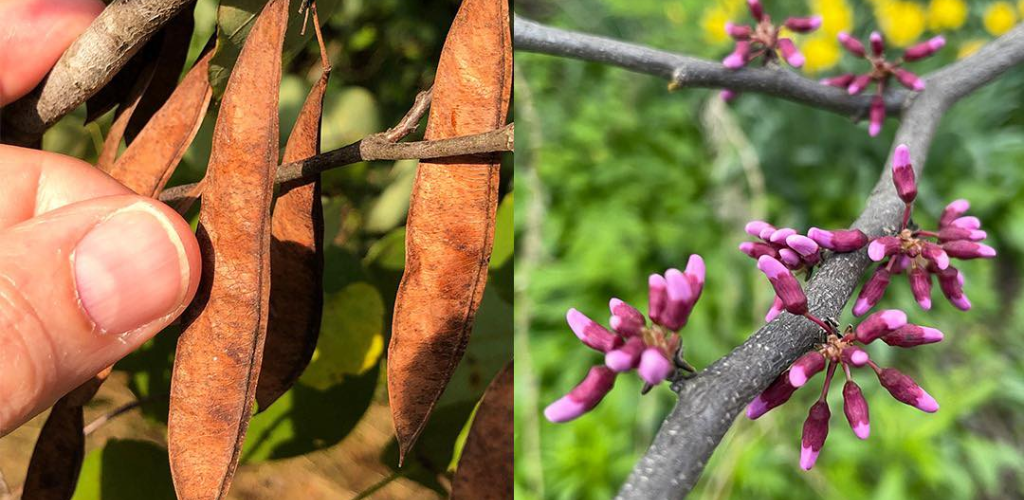
The Eastern Redbud (Cercis canadensis) is truly a stunning spring beauty that is becoming increasingly popular in gardens and parks. Its spectacular pink-purple flowers bloom before the leaves appear, bringing a real splash of color to the early spring landscape. But it does not only have aesthetic value, but also has numerous benefits and interesting practical uses.
Benefits and Characteristics of the Eastern Redbud
Breathtaking Spring Blooms: This is the main attraction of the tree. In late April, early May, even before the leaves have sprouted, intense pink-purple flowers bloom on the thicker branches and trunk. This phenomenon, called cauliflory, makes it extremely special.
Medium Size and Shape: The Eastern Redbud typically grows to 6-9 feet tall, with a wide spreading, oval or rounded crown. This makes it an ideal choice for smaller gardens or as a street tree where larger trees would be too large.
Heart-Shaped Leaves: Its glossy, heart-shaped leaves that appear after flowering are also ornamental. They turn a beautiful shade of yellow in the fall, further enhancing the tree’s appeal.
Easy Care and Tolerance: It requires relatively little care once established. It tolerates a variety of soil types (although it prefers well-drained soil) and is moderately drought-tolerant. It is not particularly susceptible to diseases or pests.
Attractive to Wildlife: The spring flowers are very attractive to bees and other pollinators, providing them with an early food source. Later, the tree’s pods (tiny, flat bean pods) can provide food for some bird species in winter.
Winter Interest: Even in winter, the tree’s interesting, zigzag branch system and the pods it retains provide structural interest in the landscape.
Practical Uses
Ornamental Tree: This is obviously its main use. It can be planted as a solitary tree in the middle of the garden, where it can stand out in all its glory, or in groups with other spring-flowering trees and shrubs. It is also an excellent choice as a street or park tree.
Band Planting and Edging: Since it does not grow too tall, it can be planted under power lines without conflicting with them. It also fits well in front of larger buildings or fences, softening the lines.
Edible Parts:
Flowers: The flowers of the redbud are edible! They have a slightly sweet-tart flavor and are very showy. They can be used in salads, to decorate cakes, or even to flavor spring drinks.
Young Pods: The young, tender seed pods of the tree are also edible, similar to green beans or peas. They can be eaten cooked, steamed, or even raw.
Prevents Soil Erosion: Its extensive root system can help bind soil and prevent erosion on sloping areas.
Pollen and Nectar Source: As mentioned above, it is an important nectar source for bees in the early spring when few other flowering plants are available. This contributes to the protection of pollinators and the health of the local ecosystem.
Overall, the Eastern Redbud is an extremely versatile and rewarding tree that, in addition to being a springtime spectacle, has many other benefits and uses. A true garden treasure!