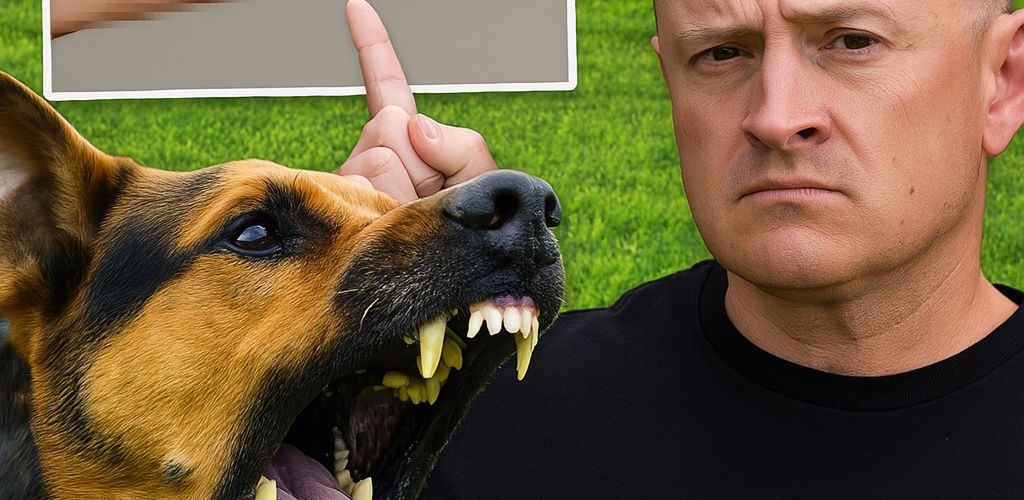
Immediate Action in the Event of a Dog Attack
The window of opportunity is extremely small, so quick action is crucial.
Remain calm, but act decisively:
Don’t panic: Yelling or frantic movements can further agitate the dog or increase its aggression. Try to remain calm.
Give clear, firm commands: A loud, deep “NO!”, “STOP!”, or “STOP!” can cause a moment of surprise or disorientation.
Use anything as a barrier or distraction:
Throw something between you and the dog: If you have a bag, backpack, jacket, or even a water bottle with you, throw it between you and the attacking dog. This can distract it or temporarily interrupt its attack.
Set up a barrier: If possible, position yourself behind a fence, a car, or a tree.
Protect yourself and important body parts:
Become a “tree”: If the dog is close and you can’t escape, cross your arms in front of your chest, make fists, and protect your neck and face. Turn your back slightly to the dog and remain still. This makes you less attractive to the dog as prey and protects vulnerable areas.
If you fall: Try to curl up and protect your head and neck with your arms. Make yourself as small as possible.
Sacrifice a limb: If the dog bites and doesn’t let go, try offering a forearm or leg to deflect the attack away from your head and neck. Twist the limb so the dog can’t get a firm grip.
Use defensive objects:
Stick or umbrella: If you have a stick, umbrella, or something similar with you, you can try to use it to keep the dog at a distance or scare it away. Aim at the nose or front legs to disorient him, not necessarily to seriously injure him (which could increase aggression).
Pepper spray (animal repellent spray): In emergencies, a special animal repellent spray can be a very effective method of stopping an attack. However, this should only be used as a last resort and requires practice.
Make noise and call for help:
Loud noises: A loud, determined yell or a sudden, loud noise (e.g., keys jingling) can scare the dog away.
Call for help: Alert other people nearby. Multiple voices or the appearance of other people can scare the dog away.
What NOT to do:
Run away: This triggers the dog’s chase instinct and makes you prey.
Yelling or frantically gesticulating: This can further agitate the dog.
Direct eye contact: This can be perceived as provocation or a challenge.
Hitting the dog (except in extreme self-defense): This can make the dog more aggressive and intensify the attack. The focus should be on distracting or disorienting the dog.
Prevention is the best protection:
The best way to stop a dog attack is to prevent it from happening in the first place:
Avoid risky situations: Don’t enter the territory of an unfamiliar dog.
Pay attention to warning signs: Growling, bared teeth, raised fur, stiff posture – these signals must be taken seriously.
Ask for permission: If you want to pet a dog, always ask the owner.
Don’t approach dogs from behind.
Don’t leave children unattended with dogs.
It’s important to be aware that every attack is unpredictable. The strategies mentioned increase the chances of surviving a dangerous situation, but unfortunately, there is no 100% guarantee in 3 seconds.
Have you ever experienced a threatening situation with a dog