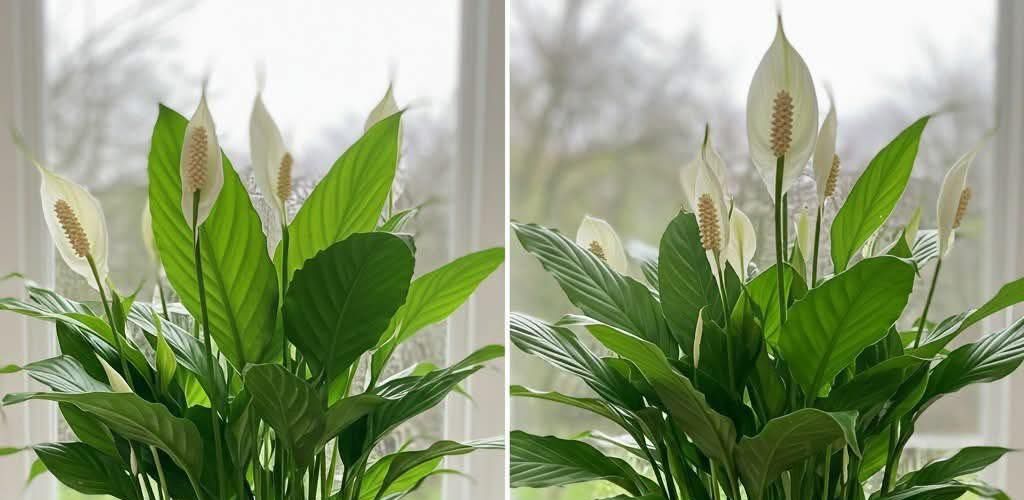
The peace lily (Spathiphyllum), also known as the spathiphyllum, is a popular houseplant that brings a touch of elegance and tranquility to your home. Its glossy dark green leaves and white quiver-shaped flowers symbolize harmony and purity. Although it is a relatively undemanding plant, keeping it healthy and blooming abundantly requires some care – and this is where one simple but very effective trick comes to the rescue: rice fertilizer.
✅ What peace lily needs to thrive
Before you start fertilizing, it is important to provide the plant with the right conditions:
Indirect light: Place it near a bright window, but not in direct sunlight, which could burn the leaves.
Constant humidity: The substrate should always be slightly moist, but not soggy. In dry air, the plant will grow regularly.
Constant temperature: The ideal temperature is between 20-28 °C, without cold drafts.
Clean leaves: Dust reduces the ability to photosynthesize. Wipe the leaves with a damp cloth once a month.
🌾 Why use rice as fertilizer?
You may be surprised, but ordinary rice contains many important nutrients – phosphorus, potassium, magnesium and trace elements that benefit plants. Rice infusion supports:
Formation of new flowers
Strengthening the root system
Greener, shinier leaves
🧪 How to make rice fertilizer
You will need:
100g raw rice (approximately ½ cup)
3l hot water
Blender or mortar
A cheesecloth or fine sieve
A container to store the liquid
Procedure:
Crush or blend the rice into a coarse powder.
Mix with hot water and let steep for 30 minutes.
Strain through a cheesecloth or sieve – the liquid is your fertilizer.
Let cool to room temperature.
💧 How and when to apply
Frequency: Every 14 days instead of your regular watering.
Amount: Approximately 200 ml per medium-sized pot, just to moisten the substrate.
Tip: After watering, wait 30 minutes before returning the plant to its original location – excess moisture could cause rot.
⚠️ Important final tips
If the leaves are yellow, reduce fertilization – you may have overfed.
If the soil is too wet, skip the next dose of fertilizer and let the substrate dry out.
Fertilize young or newly transplanted plants with only half the dose.
Conclusion:
The cotoneaster can bloom almost all year round if you provide it with the right light, moisture and nutrients. With the help of homemade rice fertilizer, you can provide the plant with the necessary substances in a natural way – without chemicals and unnecessary costs. You will be rewarded with lush leaves and beautiful flowers that will delight the eye and soul.
👉 Try this simple trick and watch your peace lily transform!