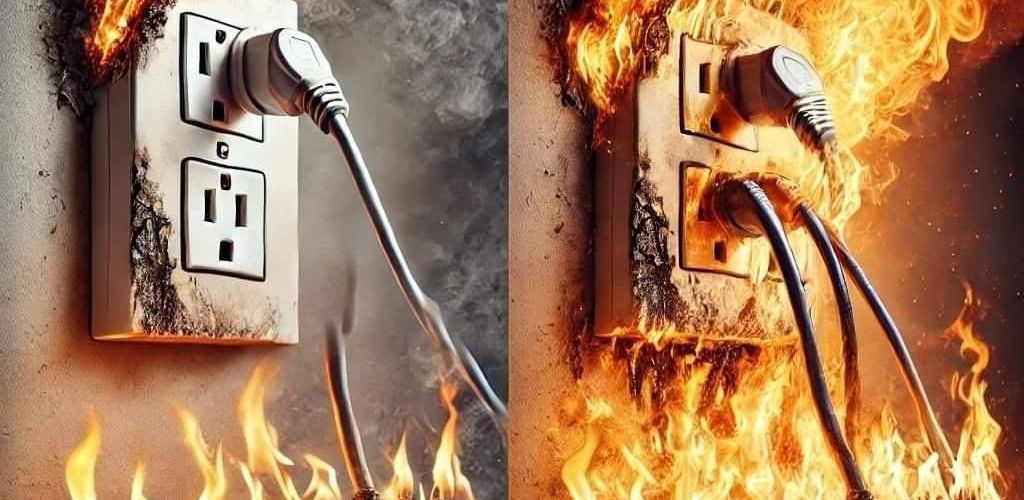
Okay, here are 9 things you should never plug into an extension cord (strip) because it can be dangerous and lead to overloading, fire, or damage to your appliances:
Why it’s important to be careful
Extension cords are designed for temporary use and for devices that don’t require a lot of current. Plugging in the wrong appliances into them risks overloading, overheating the cords, and in the worst case, even starting a fire.
What you should never plug in
Refrigerators and freezers: These appliances have a high initial current surge and then a constant, albeit smaller, draw. They are designed to be plugged directly into the wall.
Microwave ovens: Microwaves use a huge amount of energy when they are in use. Plugging them into an extension cord can easily overload the circuit.
Heaters (electric heaters, oil radiators): These are some of the biggest energy guzzlers in the home. Plugging them into an extension cord is a common cause of fires.
Air conditioning: Like heaters, air conditioning requires a large current draw, which is too high for most extension cords.
Washers and dryers: These appliances with a motor and heating element are high-power and should be plugged directly into a designated wall outlet.
Toasters and sandwich toasters: Although they are used for a short time, their heating coil draws a lot of current. Again, there is a risk of the extension cord overheating.
Hair dryers and curling irons: These personal appliances also have high power to quickly reach the desired temperature. Here too, it is better to use a direct outlet.
Vacuum cleaners (especially powerful models): Modern vacuum cleaners, especially powerful ones, can have a significant power draw. Long-term use with an extension cord is not ideal.
Another extension cord (daisy-chaining): Never use one extension cord to connect another extension cord (called “daisy-chaining”). This multiplies the risk of overloading and fire.
Things to remember
Always read the instruction manual for your appliance and check the wattage of the extension cord. Most extension cords have a maximum wattage rating in watts (W) or amps (A). Make sure the total wattage of all the appliances you plug in does not exceed this limit.
Do you have any other questions about electrical safety in your home?