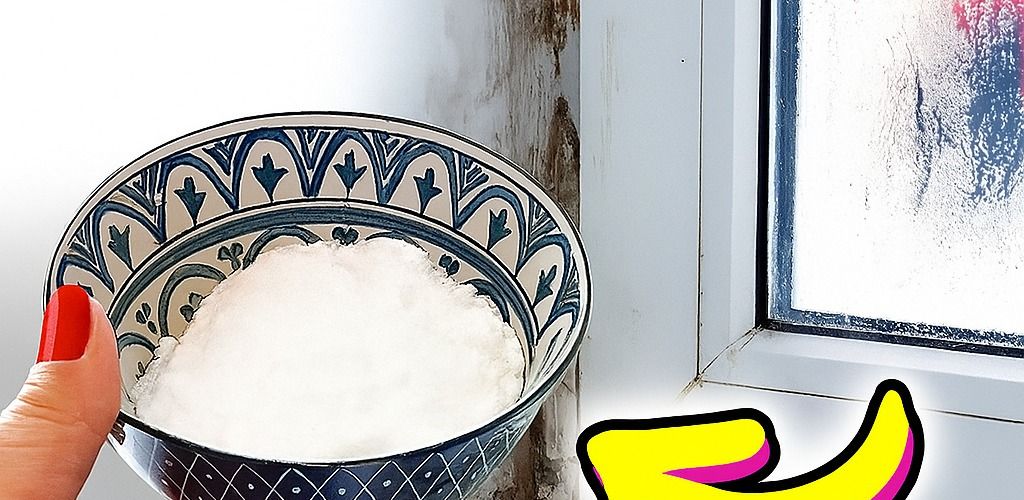
The ingenious trick against humidity: Salt as a natural dehumidifier 💪🧂
This simple and economical trick uses the hygroscopic properties of salt to extract excess moisture from the air.
What you need:
Coarse sea salt or crystal salt (not fine table salt, as it clumps too quickly)
A shallow bowl or open container (e.g., a Tupperware container without a lid, an old flower pot saucer, or a wide bowl)
Optional: A small piece of cloth or cheesecloth for covering (to prevent dust or accidental spills if you have pets or children in the house).
|
How it works (application and explanation):
Preparation: Fill the shallow bowl about 2 to 3 cm high with coarse salt.
Placement: Place the bowl in a location where moisture accumulates or air becomes stagnant. These could be:
Window sills (especially if there is condensation)
Corners of bedrooms
Closets
Bathrooms (if there is insufficient ventilation)
Pantries or corners of basements
Mode of action: Salt is hygroscopic, meaning it attracts and retains moisture from the environment. Over time, the salt becomes moist and can even become liquid. Moisture from the air is absorbed by the salt and thus removed from the ambient air.
Inspection and replacement: Check the salt regularly. Once it becomes moist, forms clumps, or even accumulates a saline solution at the bottom of the bowl, it has reached its maximum absorption capacity and should be replaced.
Disposal: You can simply pour the moist saline solution down the drain. Used moist salt can also be discarded. Drying and reusing it is not recommended, as its effectiveness often decreases. Why this trick is ingenious and effective:
Affordable: Salt is extremely inexpensive and available in large quantities.
No energy consumption: Unlike electric dehumidifiers, this method uses no electricity, making it very sustainable.
Easy to use: Requires no installation or maintenance, other than regularly changing the salt.
Safe and natural: No chemicals are released, making it safe for homes with children and pets.
Local effectiveness: It is particularly effective in smaller, enclosed areas where humidity is a problem.
Important additions for a damp-free home:
While the salt trick is ingenious, it should be considered a complement to good habits for dealing with humidity problems holistically:
Regular ventilation: Ventilation (briefly and vigorously opening windows, ideally cross-ventilation) several times a day is the most important measure for getting humid air out.
Heating: Even in winter, the heating should not be turned off completely, as warm air can absorb more moisture. A constant room temperature helps.
Drying clothes: If possible, dry clothes outdoors or in a well-ventilated room with the window open.
Removing condensation: Wipe away condensation on windows or walls immediately.
Showering/cooking: Ventilate immediately after showering or cooking to dissipate steam.