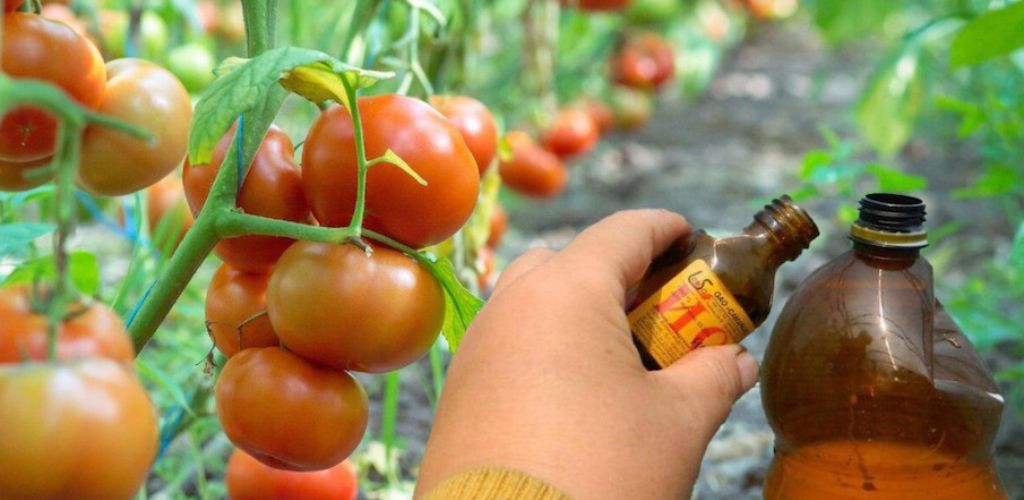
Two Effective Treatments against Late Blight (Focus on Practical and Sustainable Approaches)
Here are two pillars for combating late blight, which, when combined, offer a robust defense:
- Bordeaux Mix: The Classic Preventative and Contact Treatment 🧪
Bordeaux mix is a fungicide and contact bactericide, widely used in organic farming. It is a mixture of copper sulfate, quicklime, and water. Copper acts as a protective agent on the leaves, preventing fungal spores from germinating and infecting the plant.
How it Works:
Creates a protective barrier on the leaves, stems, and fruits.
Copper is toxic to pathogen spores, preventing their penetration.
It is especially effective when applied preventively, before the disease manifests itself, or at the first signs. How to Prepare and Apply:
Basic Ingredients: Copper sulfate, quicklime, and water.
Typical ratio: 100g of copper sulfate + 100g of quicklime to 10 liters of water.
Caution: Wear personal protective equipment (gloves, goggles) when handling lime and copper sulfate.
Preparation:
Dissolve the copper sulfate in 5 liters of water (use a plastic container).
In another container, dissolve the quicklime in 5 liters of water.
Slowly add the copper sulfate solution to the lime solution, STIRRING CONSTANTLY. It is crucial to add the copper to the lime, not the other way around, to maintain the stability of the solution.
Test the pH of the solution: Dip an iron object (such as a clean nail) in the mixture for a few minutes. If the nail rusts (turns reddish), the solution is acidic and needs more lime. If the nail doesn’t change, the pH is correct (close to 7 or slightly alkaline), and the solution is ready.
Application:
Use a clean sprayer and apply the Bordeaux mixture to the leaves, stems, and fruits of your plants, ensuring complete coverage.
Frequency: Apply preventively, especially during periods of high humidity and mild temperatures (conditions favorable for late blight). Every 7-10 days, or after heavy rains, it may be necessary to reapply, as the solution is washed away by the rain.
Best Time: Apply early in the morning or late in the afternoon, avoiding strong sunlight.
Advantages:
Effective and inexpensive.
Accepted in organic farming.
Helps prevent other fungal diseases.
Disadvantages:
Requires careful preparation and pH testing.
Can leave a bluish residue on the leaves.
This is a preventative measure; its effect is limited in advanced infections. 2. Integrated Cultural Management and Prevention Practices 🌿🛡️
This “treatment” is not a single application, but a set of practices that are essential for preventing and controlling late blight, as they reduce inoculum (the amount of fungus in the environment) and strengthen the plants.
How It Works:
Creates an environment less favorable to fungal development.
Reduces disease pressure from the outset.
Strengthens the plant’s natural resistance.
Key Practices (what’s “worth its weight in gold”):
Crop Rotation: Do not plant potatoes or tomatoes in the same location year after year. Alternate with crops that are not hosts to late blight for at least 2-3 years (e.g., corn, beans, squash). This helps reduce the number of dormant spores in the soil.
Choosing Resistant/Tolerant Varieties: Whenever possible, choose potato and tomato varieties that have been developed for greater resistance or tolerance to late blight. Ask for information at local nurseries or agricultural cooperatives in Ternopil.
Proper Spacing and Pruning:
Plant seedlings at the recommended spacing for your variety. This improves air circulation between plants, which helps dry the leaves quickly and hinders the growth of the fungus (which loves moisture).
Prune regularly to remove the lowest leaves (which touch the ground and can be a source of infection) and improve the plant’s internal ventilation.
Conscious Watering:
Avoid wetting the leaves: If possible, use drip irrigation or water directly at the base of the plant. If using sprinklers, do so early in the morning so the leaves dry completely before nightfall.
Do not over-water: Excessive soil moisture also promotes the disease.
Disposing of Waste and Diseased Plants:
At the first sign of late blight, immediately remove and destroy the affected plants or parts. Do not place them in the compost pile, as the spores can survive and spread. After harvesting, thoroughly clean the area, removing all plant debris.
Balanced Fertilization: Well-nourished plants are more resilient. Maintain a balanced nutrient balance, with an emphasis on boron, calcium, phosphorus, and magnesium, which can increase plant resistance.
Tool Hygiene: Clean and disinfect your gardening tools after using them on diseased plants to prevent the spread of disease.