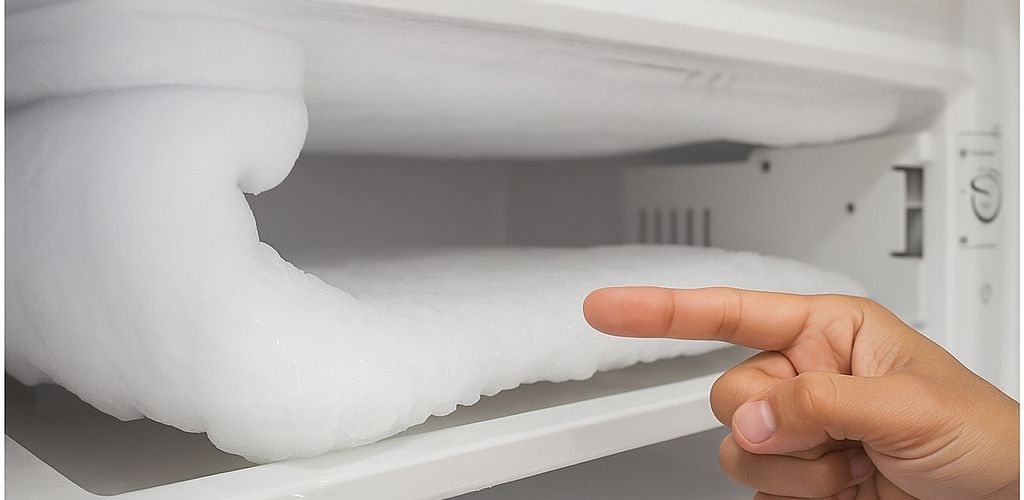
Close the Door Properly and Check the Rubber Seals
This is the most common cause of ice formation!
Check the seals: Check the rubber seals on your freezer door. Are they brittle, cracked, or no longer fitting properly? A leaking seal lets warm, moist air into the freezer, which then condenses and freezes.
Test: Place a piece of paper between the door and the seal and close the door. If you can easily pull the paper out, the seal may be leaking and needs to be cleaned or replaced.
Clean the seals: Clean the seals regularly with warm water and a little dish soap. Residue can prevent a proper seal.
Close the door quickly: Don’t keep the freezer door open longer than necessary. Every gap and every second allows warm air to enter.
Wrap your food properly
The moisture in the food itself is also a major factor in ice formation.
Airtight packaging: Wrap all food airtight before freezing. This will prevent moisture from escaping and ice from forming in the freezer. Use freezer bags, airtight containers or freezer-safe plastic wrap.
Vacuum sealing: If you have a vacuum sealer, use it! This is the best way to keep air and moisture out.
Refrigeration: Always let hot food cool completely before placing it in the freezer. Hot food gives off a lot of steam, which freezes immediately.
Optimize the temperature
An incorrectly set temperature can also contribute to ice formation.
Ideal temperature: Set the freezer temperature to -18°C (0°F). This temperature is cold enough to safely freeze and optimally store food. Lower temperatures are generally unnecessary and can increase energy consumption.
Check the thermostat: Check that the freezer thermostat is working properly.
Defrost regularly (by manual defrosting)
Even with the best precautions, ice can form in freezers without a defrost function.
Don’t wait: Don’t wait for a thick layer of ice to form. Defrost the freezer as soon as the ice layer is about 0.5-1 cm thick. This makes the process easier and saves energy.
No Frost function: If you want to solve the problem in the long term and your appliance is older, consider a model with No Frost technology next time you buy. These appliances automatically prevent ice formation by constantly removing moisture from the interior.
Don’t overfill your freezer, but don’t leave it empty either.
Both can be problematic.
Don’t overfill: Overfilling can block air circulation in the freezer and prevent the door from closing properly.
Don’t leave it empty: A well-stocked freezer works more efficiently because the frozen food itself acts as a cold reservoir, helping to maintain a more stable temperature even when the door is opened for short periods. Fill any empty spaces with empty boxes or crumpled newspaper if you don’t have enough food.
By following these tips, you can drastically reduce ice buildup in your freezer, save energy, free up space, and extend the life of your appliance.