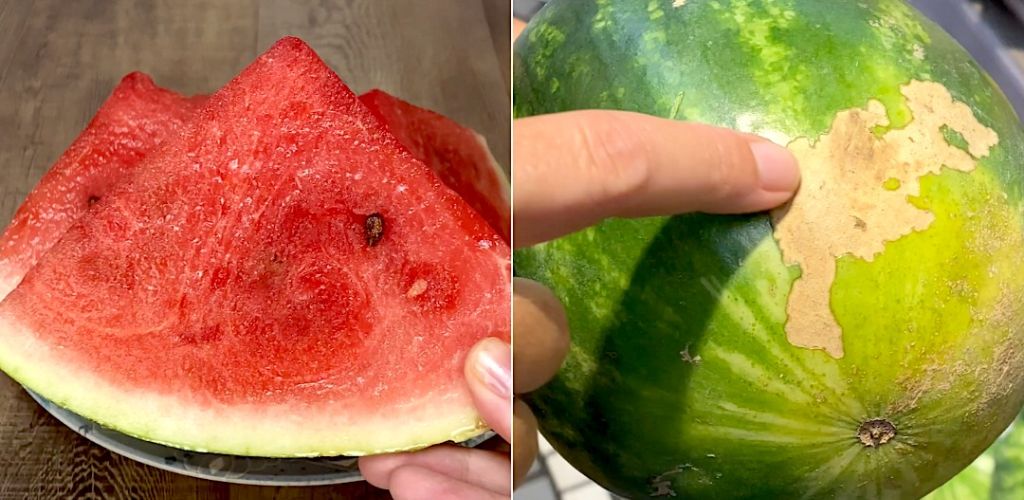
Picking a perfectly ripe watermelon can feel like a game of chance, but it doesn’t have to be! Unlike some other fruits, watermelons do not continue to ripen after they’re picked, so it’s crucial to choose a good one from the start. Here are 5 reliable tricks to help you select a sweet, juicy melon every time:
1. Check the Field Spot (The “Ground Spot”)
This is one of the most reliable indicators. Watermelons grow on the ground, and the spot where they rest develops a discolored patch because it doesn’t get sunlight.
- Ripe Sign: Look for a creamy yellow, butter yellow, or even slightly orange-yellow spot. This indicates the watermelon spent enough time ripening on the vine.
- Unripe Sign: If the spot is white or pale green, the melon was likely picked too early and won’t be as sweet.
2. The “Thump” Test
This classic method can be a bit tricky to master, but it’s a good one to combine with other indicators.
- Ripe Sign: Gently tap the watermelon with your knuckles. A ripe melon should produce a deep, hollow, resonant sound, much like tapping on a drum. This indicates the fruit is full of water and perfectly juicy.
- Unripe/Overripe Sign: A dull, flat thud or a high-pitched “ping” usually means it’s either underripe (dense flesh) or overripe (mushy inside). Practice makes perfect with this one!
3. Feel the Weight
A ripe watermelon should feel surprisingly heavy for its size.
- Ripe Sign: When you pick up the watermelon, it should feel heavy for its size, indicating it’s packed with water and juicy goodness. Compare a few melons of similar size; the heaviest one is usually the most ripe.
- Unripe Sign: If it feels lighter than expected for its size, it might not be as juicy or sweet.
4. Inspect the Skin and “Webbing”
The appearance of the rind can also tell you a lot.
- Dull Skin: A dull, matte (not shiny) rind suggests ripeness. Shiny skin often indicates an underripe melon.
- “Webbing” or Sugar Spots: Look for brown, coarse lines or rough patches (often called “sugar spots” or “webbing”) on the rind. These are believed to be a sign of sugar seeping out, indicating a sweeter melon. The more webbing, the better!
- Uniform Shape: Choose a watermelon that is symmetrical in shape (oval or round) and free from major dents, bruises, or soft spots. Irregular bumps might indicate inconsistent growing conditions.
5. Check the Stem or Tendril (Especially if buying from a farmer’s market)
While often removed in grocery stores, if you’re buying from a farm stand, this is a very strong indicator.
- Ripe Sign: The tendril (a curly vine-like protrusion) closest to the melon’s stem should be completely dried out and brown. If the stem itself is brown and shriveled where it was cut, that’s also a good sign it detached naturally from the vine.
- Unripe Sign: If the tendril or stem is still green, the watermelon was likely picked too early and didn’t have enough time to ripen on the vine.
By combining these tricks, you’ll significantly increase your chances of picking a perfectly sweet, juicy watermelon that will be the star of your summer spread!
Do you have a favorite trick for picking a ripe watermelon?