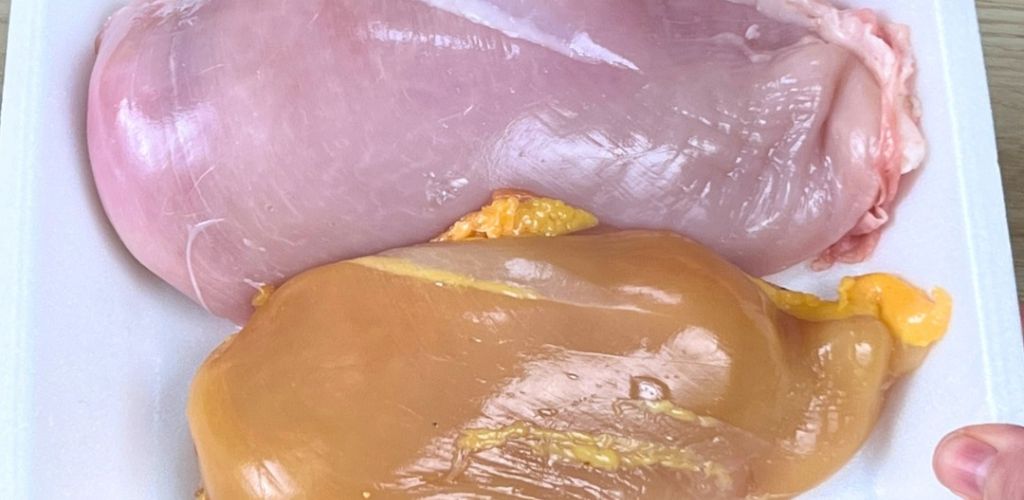
The color of chicken meat, whether white or yellow, often arises in consumers’ minds, and there are many misconceptions surrounding it. It is important to know that the difference in color does not necessarily indicate the quality, freshness or nutritional value of the meat, but rather can be explained by the animal’s housing conditions and feeding, as well as its genetics.
What is the Difference Between White and Yellow Chicken?
The most obvious difference is obviously the color of the skin and fat, and sometimes the shade of the meat can also differ.
- Feeding (the main factor)
Yellow chicken: The main cause of the yellowish color is the carotenoids in the feed. These natural pigments can be found in corn, alfalfa, grass (for pasture-raised chickens), or even marigolds (which can be added to the feed to achieve the yellow color). When a chicken consumes such feed, the carotenoids are deposited in its skin and fat tissue, giving it a yellowish hue. This is common in free-range, “farmed” or more conventionally raised chickens that eat a more varied, natural diet.
White chicken: Lighter, whiter chickens tend to have lower carotenoid content in their feed. Their diet is typically based on grains such as wheat, soy or barley, which do not affect skin pigmentation. This is common in industrial, intensively raised broiler chickens. - Breed
Although feed is the dominant factor, certain chicken breeds may be genetically predisposed to a yellower or whiter skin color, regardless of the feed. For example, the French traditionally have breeds that have naturally white skin, and white is the desired color. - Age and Exercise
Age: The meat of older animals is usually darker because myoglobin levels (the protein responsible for the color of meat) increase with age.
Exercise: Muscles that move more actively may be darker in color, as they contain more myoglobin for better oxygenation. Chickens that roam freely and move more (such as the common representatives of “yellow chickens”) have more developed muscles and may be slightly darker in color. - Fat Content
In general, yellow chickens (especially free-range) may have a slightly higher fat content, which may contribute to a more flavorful, fuller flavor. White chickens tend to have leaner meat, making them ideal for low-calorie diets.
What are the Differences in Taste and Texture?
Taste: Many consumers and chefs find that yellow chickens (especially those raised traditionally on a varied diet) can have a fuller, more intense, “chicken-like” flavor. This is due in part to the higher fat content and carotenoids in the feed. White chickens tend to have a milder, more neutral flavor, making them more versatile in cooking.
Texture: Slower-growing, more mobile “yellow chickens” have more developed muscles and may contain less water, resulting in a more elastic, dense texture. Industrial broiler meat (often called “white chickens”) is generally softer, but can sometimes be more watery.
Which One Should You Choose?
The decision depends on personal preference and intended use:
If you are looking for a stronger, richer flavor: Choose yellow chicken, especially if you can find free-range.
If you need a milder, more neutral flavor and lower fat content: White chicken is an excellent choice.
Important note: The quality and freshness of the meat depends much more on the breeding method, the health of the animal and the hygiene conditions than on the skin color alone. Both types of chicken are excellent sources of protein and can be part of a balanced diet.
Caution! In some industrially raised chickens, manufacturers may also add artificial coloring to the feed to achieve the yellow color popular in the Hungarian market. If you notice yellow spots on the packaging of chicken meat, this may indicate that the meat has been “dyed” afterwards, which is an undesirable practice. Always buy meat from a reliable source!
The most important thing is to buy chicken from a reliable source, preferably organic or from a sustainable farm, where animal welfare and feed quality are taken into account.
Which type do you prefer?