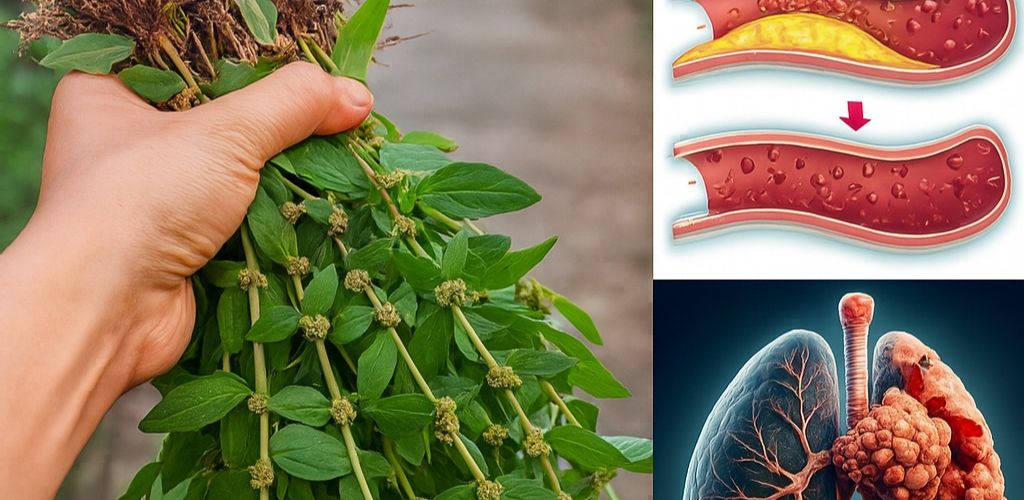
Euphorbia hirta, also known by its popular names as “swallow herb,” “santa-luzia herb,” or “asthma plant,” is indeed a hidden gem that often goes unnoticed in gardens, roadsides, and fields. Despite its unassuming appearance and the fact that it is considered a “weed” in many places, this plant has a rich history in traditional medicine and is the subject of growing scientific interest for its diverse properties.
The Discovery of Euphorbia Hirta: The Versatile Healer
Euphorbia hirta is an annual herbaceous plant, common in tropical and subtropical regions. Its leaves and stems produce a milky sap, characteristic of the Euphorbiaceae family, which should be handled with caution, as it can be irritating to the skin and mucous membranes. However, it is precisely in its various parts (leaves, stems, roots, flowers) that a complex mixture of bioactive compounds, such as flavonoids, tannins, steroids, triterpenoids, and alkaloids, is found, which give the plant its remarkable medicinal properties.
Main Benefits and Traditional Uses (and what science says):
Euphorbia hirta has been widely used in various traditional medicines, including Ayurvedic, Chinese, and African medicine. Modern research has investigated and, in many cases, confirmed these uses:
Respiratory Disorders: This is perhaps the most famous use of Euphorbia hirta, earning it the name “asthma plant.” It is traditionally used to treat:
Asthma: It is believed to have a relaxing effect on the bronchi, facilitating breathing.
Bronchitis and Cough: It helps calm coughs and cough up mucus, being used for dry, phlegmy coughs.
Hay fever and colds: Relieves associated symptoms.
Gastrointestinal Problems:
Diarrhea and Dysentery: Its antimicrobial and astringent properties are useful in fighting intestinal infections and reducing diarrhea.
Intestinal Parasites: Traditionally used as a dewormer in children.
Peptic Ulcers and Heartburn: May help soothe irritation of the digestive tract.
Increasing Blood Platelets: One of its most intriguing and studied uses is its ability to increase platelet counts, making it a potential aid in the treatment of dengue fever, where low platelets are a serious complication. Preliminary laboratory and clinical studies have shown promising results.
Anti-inflammatory and Analgesic Activity: Extracts of the plant have been shown in studies to have anti-inflammatory and analgesic (pain-relieving) activities, making it useful for headaches, muscle pain, and other inflammatory conditions. Antimicrobial and Antiviral Properties: Research indicates that Euphorbia hirta has activity against several bacteria (such as Escherichia coli, Staphylococcus aureus) and, as mentioned, against the dengue virus. There are also preliminary studies on its possible activity against other viruses, including those that cause symptoms similar to COVID-19.
Women’s Health: Traditionally used for some female disorders and as a galactagogue (to increase milk production in breastfeeding mothers).
Skin Conditions: The plant’s latex has been applied topically to treat warts, boils, and wounds, although caution is required due to its potential irritation.
Precautions and Considerations:
Despite its many benefits, it is crucial to keep in mind that:
Latex Irritant: The milky sap of Euphorbia hirta is toxic if ingested and highly irritating upon external contact, and can cause photosensitive skin reactions and severe inflammation, especially if it comes into contact with the eyes or open wounds. Even dried material can retain some toxicity.
Dosage and Professional Guidance: The use of medicinal plants should be done with caution and, ideally, under the guidance of a qualified healthcare professional. Large doses can cause gastrointestinal irritation, nausea, and vomiting.
Drug Interactions: There may be interactions with certain medications.
Do not use without knowledge: You should not self-medicate or apply the plant without knowing how to prepare and use it correctly.
Euphorbia hirta is undoubtedly a “hidden gem” in the world of medicinal plants. Its ubiquity and wide range of traditional uses underscore its potential. As science continues to explore its components and mechanisms of action, “swallow herb” may come to play an even more significant role in health and well-being.
Were you already familiar with this plant or any of its uses?