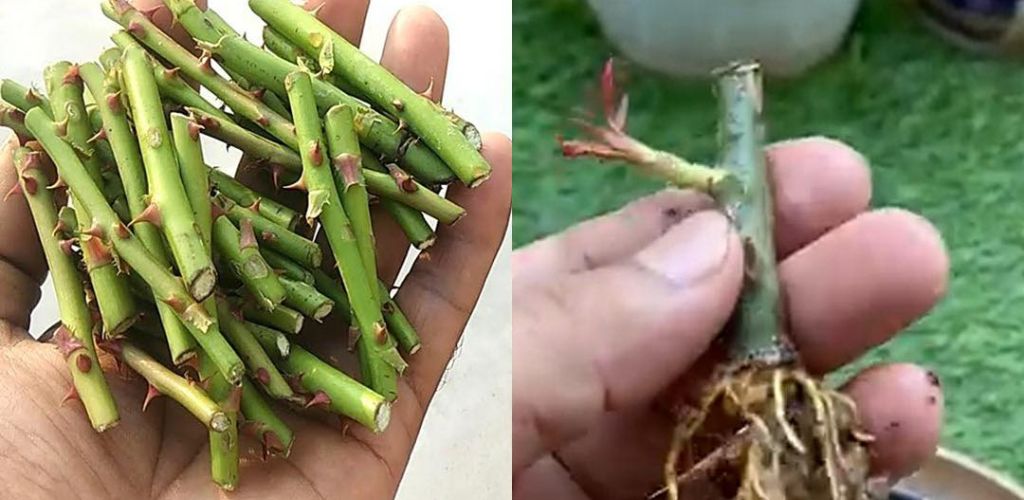
How to Propagate Roses by Cuttings with Bananas: A Simple and Curious Method 🌱🍌🌹
This method is fun to try and can be surprisingly effective for some people!
Materials Needed:
Rose Bouquets: Choose healthy branches, without flowers or flower buds, that are about 6-8 inches long and about the thickness of a pencil. They should be semi-hardwood (not too green, not too woody), usually from the current year’s growth that has already matured a bit. The best time to take cuttings is in late spring/early summer or early fall.
Ripe Bananas: One or two ripe bananas for each cutting or group of cuttings.
Rooting Substrate: A light, well-draining substrate, such as a peat and perlite mixture, or coarse sand. Pots (with drainage holes): Small individual pots or a propagation tray.
Clean, Sharp Pruning Shears: To make clean cuts on the cuttings.
Rooting Hormone (Optional, but highly recommended): Powder or gel. It significantly improves the chances of success.
Cut Clear Plastic Bottle or Plastic Bag: To create a mini-greenhouse.
Step by Step: The Banana Method for Propagating Roses
Step 1: Preparing the Rose Cuttings
Cut the Branches: Using clean, sharp pruning shears, cut rose branches about 6-8 inches long. Make sure each cutting has at least 3-4 nodes (the points where leaves form).
Remove the Lower Leaves: Remove all leaves from the bottom of the cutting, leaving only 2-3 leaves at the top. This reduces water loss through transpiration. Make a Cut at the Base: Make a diagonal cut (at a 45-degree angle) just below a node at the base of the cutting. This increases the surface area for water and nutrient absorption.
Step 2: Applying the Banana and Hormone (Optional)
Rooting Hormone (Recommended): If using rooting hormone, dip the cut end of each cutting in the hormone powder or gel. Shake off any excess.
The Banana: For each cutting (or small group of 2-3 cuttings), take a ripe banana. Using a pencil or toothpick, poke a deep hole in the banana where you will insert the cutting. The banana will provide nutrients and a humid environment.
Step 3: Planting the Cuttings
Prepare the Pots: Fill the pots or propagation tray with rooting medium. Poke holes in the medium with a pencil or your finger.
Insert the Banana with the Cutting: Carefully insert the banana (with the cutting already inserted) into the prepared medium. Make sure the banana-bearing part of the cutting and about 2/3 of the cutting are submerged in the potting mix.
Cover and Firm: Cover the base of the cutting with potting mix and press gently around it to firm it.
Step 4: Create a Humid Environment (Mini-Greenhouse)
Water Gently: Water the planted cuttings gently to moisten the potting mix.
Create a Mini-Greenhouse: Cover each pot with a cut-off clear plastic bottle (remove the bottom and lid for ventilation) or place the pot inside a clear plastic bag, securing it to create a humid environment.
Location: Place the pots in a location with bright, indirect light, away from intense direct sunlight, which can overheat the mini-greenhouse. Maintain a mild, consistent temperature (ideally between 18°C and 24°C).
Step 5: Care and Patience
Check Humidity: Keep the potting mix consistently moist, but not soggy. Check every few days and mist with water if necessary.
Ventilation: Remove the cover for a few minutes each day to allow air circulation and prevent fungal growth.
Patience: Rooting of rose cuttings can take 4 to 8 weeks, or even longer. Be patient!
Step 6: Test Rooting and Transplanting
Gentle test: After a few weeks, gently tug on the cutting. If you feel some resistance, it’s a sign that roots are beginning to form. You may also see new leaf buds.
Acclimation: Once the roots are well formed (after a few weeks of solid rooting), begin removing the cover from the mini-greenhouse gradually for longer periods each day to acclimate the new plant to the outdoor environment.
Transplanting: Once the plant is well established and has a good root system, carefully transplant it to a larger pot filled with rose potting mix or to its permanent location in the garden. Notes on the Banana Method:
Banana acts as a natural source of potassium, phosphorus, and nitrogen, and releases ethylene (a gas that can influence plant growth) and organic compounds as it decomposes, which some believe stimulates rooting.
It’s an “eco-friendly” method and fun to try, but moisture consistency and rooting hormone (if used) are likely the main factors.