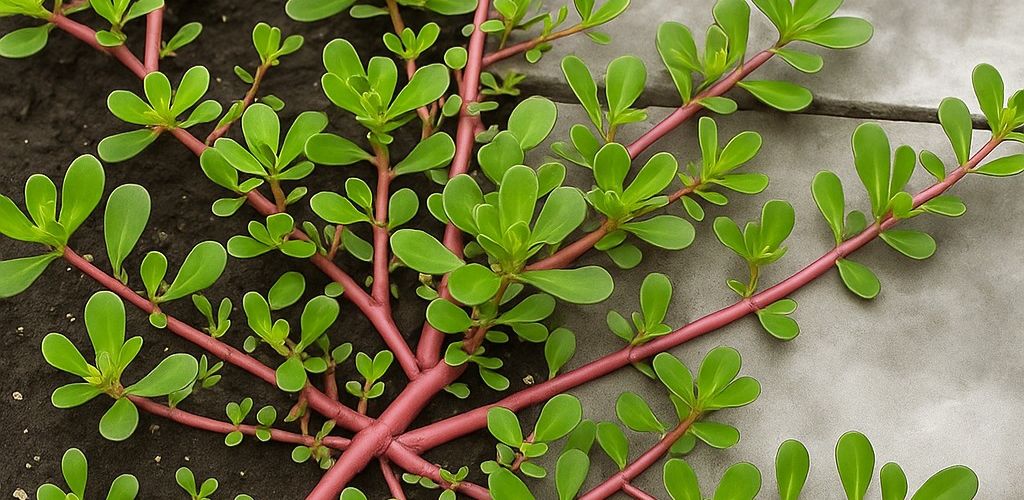
Do you have purslane growing in your garden? Before you dismiss it as a weed and pull it out, stop for a moment! Purslane (Portulaca oleracea) is much more than it seems and offers a number of incredible benefits.
Purslane in your garden: 8 reasons not to kill it!
This often underrated, low-growing succulent plant is a true nutritional powerhouse and an unexpected ally for your garden.
- A Powerful Source of Nutrients
Purslane is one of the most nutritious plants you can find. It is extremely rich in:
Omega-3: One of the few significant terrestrial plant sources of this essential fatty acid, crucial for heart and brain health.
Vitamins: High concentrations of Vitamin A (in the form of beta-carotene), Vitamin C and some B vitamins.
Minerals: Magnesium, calcium, potassium and iron.
Antioxidants: Contains glutathione, melatonin and betalains, which fight free radicals and protect cells.
- Edible and Delicious
Yes, purslane is completely edible and has a surprisingly pleasant flavor, slightly acidic and salty, with a crunchy and juicy texture.
Usage: You can add it raw to salads, sandwiches, green juices, or cooked in soups, stews and stir-fries, as you would with spinach.
- Medicinal Properties
In traditional medicine, purslane has been used for centuries due to its properties:
Anti-inflammatory: Helps reduce inflammation in the body.
Antioxidants: Protects against oxidative stress.
Diuretics: Can help eliminate toxins.
Healing: Used externally to soothe skin irritations and promote the healing of minor wounds.
- Resilience and Ground Cover
Purslane is an incredibly resilient plant and spreads easily, which is a plus in the garden:
Live Mulch: It acts as an excellent natural mulch, protecting the soil from erosion caused by rain and wind.
Weed Suppression: By covering the soil, it competes with other unwanted weeds, reducing the need for weeding.
- Soil Moisture Conservation
As a succulent plant, purslane stores water in its leaves and stems. When grown as a ground cover, it helps to:
Hold moisture: Reduces evaporation of water from the soil, which means you will need to water your plants less.
Moderate the temperature: Keeps the soil cooler on hot days.
- Attracts Beneficial Insects
Although it is often seen as a “weed,” purslane can attract beneficial insects to your garden, such as:
Ladybugs: Natural predators of aphids, maintaining biological balance.
Other pollinators: Although its flowers are small, they can attract some beneficial insects.
- Improves Soil Quality
As purslane grows and eventually dies (or is incorporated into the soil), it contributes to:
Increasing organic matter: Enriches the soil with nutrients.
Improving soil structure: Helps aerate the soil and retain nutrients.
- Easy to Grow (and Spreads Itself!)
You don’t have to do anything to grow it! If you’ve already seen it in your garden, consider yourself lucky. It thrives in poor, dry soils and spreads naturally, ensuring a continuous supply.
So next time you see purslane in your garden, instead of seeing it as a nuisance, see it as a gift from nature. It’s nutritious, good for the soil, and can be a great addition to your diet! Why not try a purslane salad?