The art of choosing a sweet and ripe watermelon 🍉
- The yellow spot (field spot / ground spot)
What it is: This is the area on the underside of the watermelon where it has been lying on the ground and not directly exposed to the sun.
What to look for: A creamy yellow to golden orange color is a very good sign. This means the melon has had enough time to ripen in the field and develop its sweetness. A white or even greenish spot indicates that the melon was harvested too early and is probably not as sweet. - The weight
What to look for: Lift the watermelon. A ripe watermelon should feel surprisingly heavy for its size. Watermelons are over 90% water, and a high weight indicates a high water content and therefore juiciness and ripeness. If you have two melons of the same size, always choose the heavier one. - The Knock Test
What to look for: Knock the watermelon with your knuckles or the palm of your hand.
A ripe melon produces a deep, hollow, and full sound that resonates slightly. Some describe it as a dull or rich tone.
An unripe sound is often brighter, flatter, or even metallic.
An overripe sound can also be very dull and “mushy.” - The Stem Base (or the Hole Where the Stem Was)
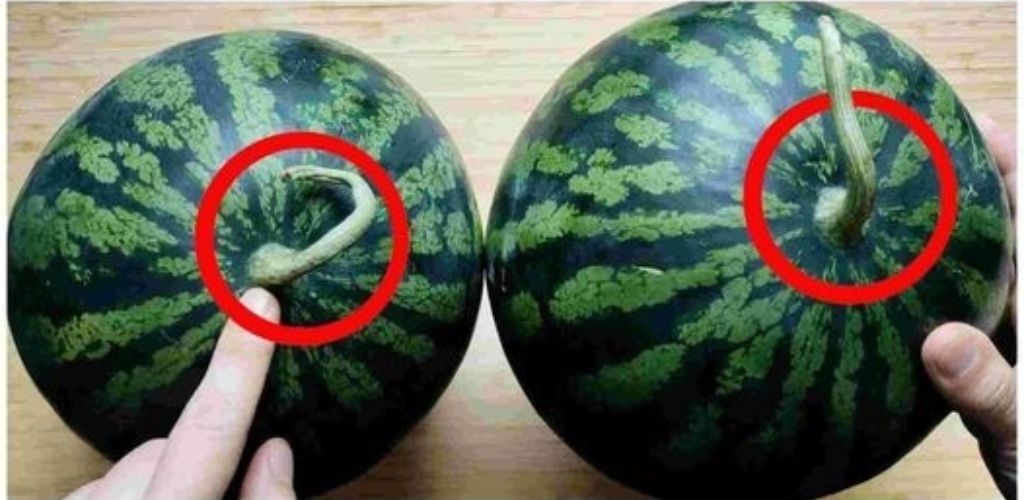
What to look for: If the watermelon still has a stem, it should be dry and brownish. This indicates that the melon was harvested ripe and has naturally separated from the vine. A green, fresh stem can be a sign that the melon was harvested too early. If only a small hole remains, that’s also a good sign. - The “spider web” (webs or brown lines)
What to look for: Small, brown, net-like lines on the rind are actually a good sign! These so-called “sugar web” lines indicate that bees have pollinated the flower frequently. The more of them, the better the taste is said to be. - The shape and appearance of the rind
What to look for: A ripe watermelon should have a uniform and symmetrical shape, without large dents or soft spots. The rind should be smooth and matte, not shiny. A shiny rind can indicate that the melon isn’t fully ripe. Look for a deep, rich green color, but note that the color can vary depending on the variety.
In summary:
If you find several of these characteristics on a watermelon, chances are you’ve picked up a wonderfully sweet and juicy fruit! It’s a mix of science and a bit of instinct, but with these tips, you’ll be well equipped.
Do you have a favorite watermelon trick that always works for you?