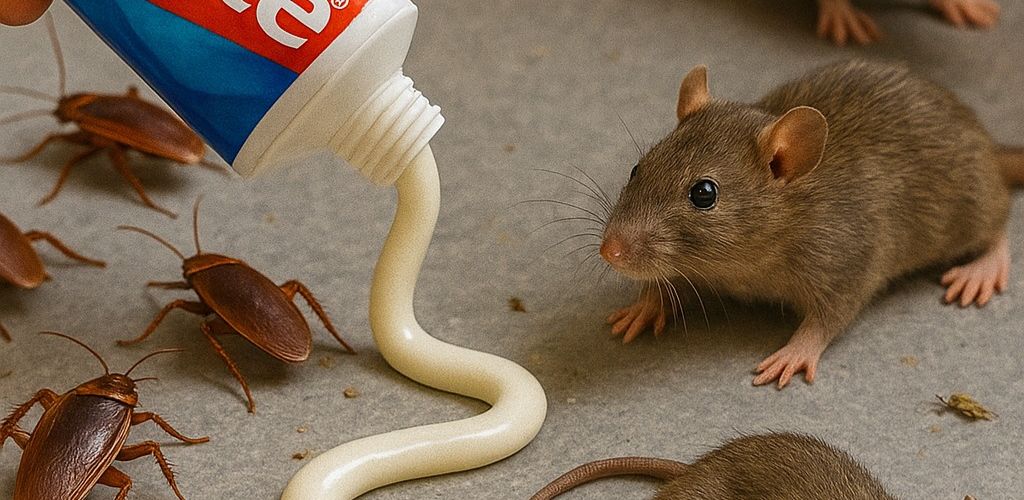
Toothpaste has been circulating as a popular tip on some platforms, usually mixed with other ingredients.
Toothpaste and Rodent Control: What Popular Tips Say
Some home recipes suggest using toothpaste in conjunction with other products to create a “bait” that will supposedly eliminate rats. A more common idea involves:
Toothpaste: The smell and chemical components of toothpaste are believed to be unpleasant or even harmful to rodents.
Washing powder: Added to the mixture, usually to give it consistency and possibly with some digestive irritation if ingested.
Sugar or flour: To attract rats to eat the mixture.
How the “recipe” is usually made:
A tablespoon of toothpaste is mixed with a tablespoon of laundry detergent (and sometimes a little sugar or flour to attract them).
The mixture is formed into balls.
The balls are placed in strategic places where rats tend to appear (such as closets, pantries, under the sink).
What Science Says and What to Consider
It is important to be cautious with home remedies, especially when dealing with pests that can transmit diseases.
Efficacy: There is no solid scientific evidence that toothpaste (even mixed with other items) is an effective rodenticide or repellent against rats and mice. Although rodents may be attracted to the smell of sugar (if added), or even curious about the mixture, the components of toothpaste are not formulated to be lethal to them in small quantities.
Safety: The use of any substance other than an approved and safe rodenticide can be dangerous.
For pets: If you have children, cats or other domestic animals, you can ingest these homemade “bait”, which can cause serious health problems, depending on the ingredients and the quantity ingested.
For children: Small children are curious and can put balls in their mouths, with risks to their health.
For rats themselves: Even though it is not lethal, it can cause unnecessary suffering to animals.
Infestation control: Rat infestations require proven and often professional methods. Rodents reproduce quickly and can cause structural damage in your home, as well as transmitting diseases.
Proven and Safe Methods for Eliminating Mice and Rats
For effective and safe rodent control, the most recommended methods are:
Hygiene and Sanitation:
Keep your home clean and organized, eliminating food sources. Store food in airtight containers.
Fix leaks and eliminate water sources.
Dispose of trash in trash cans with tight-fitting lids.
Exclusion (Closing Access):
Identify and seal all holes, vents and openings in your home through which rodents can enter (walls, baseboards, roofs, around pipes). Remember that a mouse can fit through a hole the size of a coin.
Traps:
Spring traps (mousetraps): Effective for capturing a small number of rodents. Use attractive baits such as peanut butter, chocolate or oatmeal.
Glue traps: These can be useful, but some consider them less humane because the animal gets trapped.
Electronic traps: These kill rodents with a quick electric shock and are considered more humane by some.
Live traps: These allow the animal to be captured and released in a remote location (away from residential areas).
Rodenticides (Veneto): These should be used with extreme caution and only if other options are not working.
Choose registered products and follow the manufacturer’s instructions carefully.
Place rodenticides in places that are inaccessible to children and pets. Use safe bait stations.
Professional Pest Control: For large or persistent infestations, the best solution is to hire a company that specializes in pest control. They have the knowledge and the appropriate products to deal with the situation safely and effectively.
If you are experiencing problems with rodents, I strongly recommend that you prioritize committed and safe methods to protect your health, your family and your pets