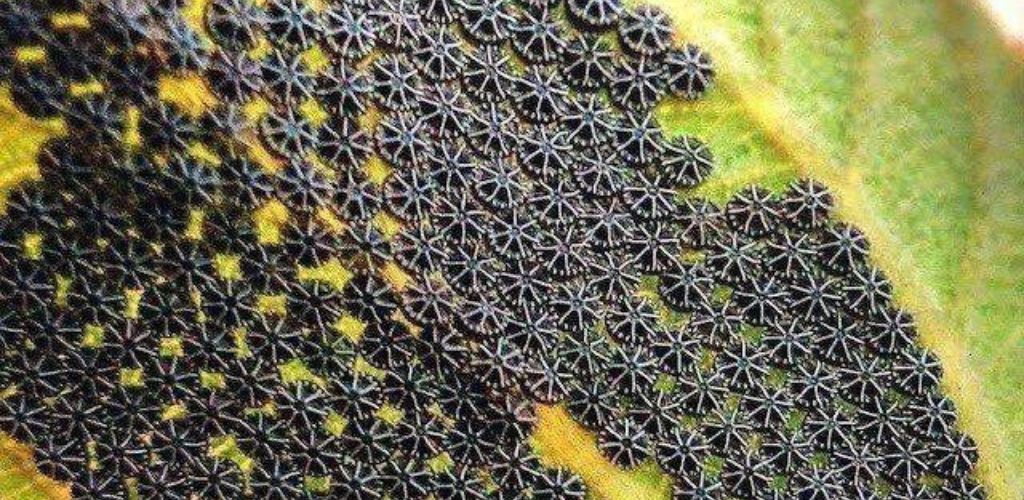
If you see something unusual on your plants and are wondering whether you should touch it, caution is always the best course of action. Without a picture or a more detailed description, it’s impossible to identify the specific thing, but here are the most common things on plants you should avoid touching, and why:
Don’t Touch: Potential Dangers on Your Plants
- White, cotton-like structures or sticky residue (scale insects/mealybugs) 🦠
What it is: These are likely mealybugs or scale insects. Mealybugs look like small, white, cotton-like patches. Scale insects are often brown, solid bumps. Both are pests that attach themselves to your plants and suck out sap. The “sticky residue” is honeydew, a sugary secretion from these pests, which can later lead to black sooty mold.
Why not touch: While the pests themselves aren’t directly harmful to humans, touching them can easily spread them to other plants or other areas. The honeydew is sticky and unpleasant.
What to do: Isolate the plant. Carefully remove the pests with a cotton swab dipped in alcohol, or treat the plant with a neem oil solution or special insecticides for houseplants. - Small, moving dots or tiny webs (spider mites, aphids, thrips) 🕷️🐜
What it is: These are often spider mites (which produce tiny webs), aphids (small green, black, or brownish insects, often found in groups), or thrips (very small, slender, black insects). They are also plant pests.
Why not touch: While harmless to humans, they are extremely easy to spread. Simply touching a plant and then touching another can quickly cause an infestation throughout your entire plant.
What to do: Shower, spray with soapy water, apply neem oil, or, in the case of a severe infestation, use a suitable insecticide. - Small, shiny, black dots (pest eggs or droppings) ⚫
What it is: Could be pest eggs (e.g., spider mites) or droppings (e.g., fungus gnat larvae or other caterpillars).
Why not touch: There’s a risk of spreading the disease. It’s also simply unhygienic.
What to do: Clean the leaves. If the problem occurs repeatedly, you should look for the actual pests. - Unusual fungal growth or mold (fungal infestation) 🍄☁️
What it is: This can be mold, mildew (a white, powdery coating), or other fungal species growing on the plant or soil, often due to overwatering or poor ventilation.
Why not touch: While most fungi on plants are harmless to humans, some can trigger allergies or cause irritation in sensitive individuals. You can also unknowingly spread fungal spores to other plants.
What to do: Remove infected plant parts, improve ventilation, and avoid overwatering. Treat with a fungicide if necessary. - Crystals or deposits on the soil or leaves (salts) 🧂
What it is: White, crusty deposits on the soil or leaves are often salt deposits from irrigation water or fertilizer residue.
Why not touch: While not dangerous, they are sticky or crumbly and can be unpleasant on the skin. They are also a sign of a problem (too much fertilizer, hard water, poor drainage).
What to do: Water the plant with distilled water or rinse it under running water to remove the salts. Filter the water you use to water it.
General advice:
If you see something on your plants that you don’t recognize or that looks unusual, observe it first. Take a photo, search for it online, or ask in a gardening forum. Touching it should be a last resort, especially if you suspect it might be pests, fungus, or something irritating. Gloves are a good idea if you must have direct contact