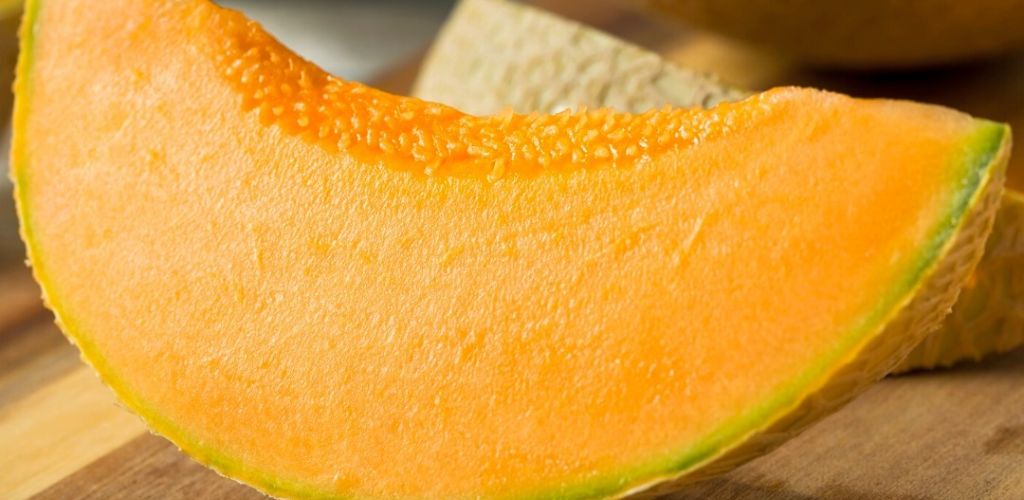
Choosing a ripe and sweet melon may seem like a challenge, but with a few simple tricks, you’ll always get it right! The secret is to use all your senses: touch, smell and even hearing.
The foolproof tricks to know if a melon is ripe
- The aroma test (smell)👃
This is one of the most reliable indicators!
Ripe melon: It should have a sweet and fruity aroma at the base (where the stem was, the part opposite the “navel”). If the smell is strong and pleasant, it’s a good sign.
Unripe melon: It won’t have much of an aroma, or the smell will be very subtle.
Overripe melon: If the smell is too strong, too sweet, or with a touch of fermented/sour, the melon may be overripe. 2. The Touch and Pressure Test (Tactile)👆
The texture and elasticity of the rind and edges tell a lot.
At the “navel” (opposite the stem): Gently press this area with your thumb. In a ripe melon, it should give slightly and be a little soft. If it’s too hard, it’s still green. If it’s too soft, it may be overripe.
At the stem: In many melon varieties, the stem should have come off or be about to come off easily. If the melon still has a small piece of stem attached tightly, it may not be ripe. The base of the stem should feel a little cracked or “dry”.
General texture of the rind: The rind should be firm all over, with no soft areas, dark spots, cracks or holes. For some varieties (like Cantaloupe), the “netting” on the rind should be well defined and the lines short and open. 3. The Weight Test (Touch)⚖️
A ripe melon should feel heavy for its size. This indicates that it is full of juice and well hydrated, which is a sign of sweetness. If it is too light, it may be dry inside or still green.
- The Sound Test (Hearing)👂
This is a classic!
Gently tap the melon with the palm of your hand, as if you were knocking on a door. A ripe melon should produce a hollow sound. If the sound is muffled or “soft”, it may be green or overripe.
- The Shake Test (Hearing and Touch) shake
Shake the melon gently near your ear. If you can hear the seeds inside popping out, that is a good sign that it is ripe and ready to eat. Loose seeds indicate that the pulp has separated a little from them, a sign of ripeness. Additional Signs (and What to Avoid):
Color: The color of the rind can vary greatly between melon varieties, but generally, a ripe melon will be a vibrant, uniform color with no large green spots (unless it’s a variety that stays green, like Galia or Honeydew, where the green can turn creamy).
Yellow spots (for watermelon): While this is a telltale sign for watermelon, it’s a good indicator that the fruit has ripened in the ground.
Avoid: Melons with cracks, very soft or “sunken” areas, mold, or a very strong, unpleasant odor.
By combining these techniques and paying attention to the details, you’ll dramatically increase your chances of taking home a juicy, sweet, perfectly ripe melon!
Which of these tricks do you use most when choosing a melon?