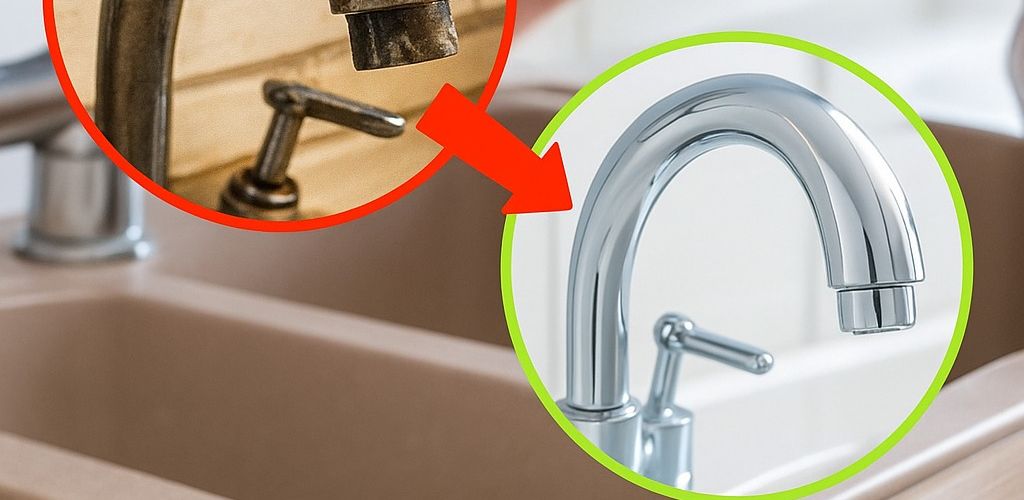
Permanently remove limescale with these natural ingredients: Little effort, brilliant results
🌿
this recipe
Limescale deposits are a constant nuisance in many households, especially in areas with hard water. They make fixtures look dull, clog shower heads, and reduce the efficiency of household appliances. Fortunately, you don’t have to resort to harsh chemicals to solve this problem. With a few simple, natural ingredients and the right techniques, you can effectively and permanently remove limescale with little effort!
The key to success lies in understanding that limescale (calcium carbonate) is alkaline and is therefore neutralized and dissolved by acids.
The heroes of natural descaling
Vinegar (acetic acid):
Why it works: Vinegar is the classic among natural limescale removers. Whether using household vinegar (5% acid) or vinegar essence (up to 25% acid), the acetic acid they contain effectively dissolves limescale deposits.
Application:
Faucets & shower heads: Soak a cloth with vinegar (or vinegar essence diluted 1:1 with water), wrap it around the limescale-affected areas, and let it work for 30 minutes to several hours (or overnight for heavy limescale). Then simply wipe and rinse.
Coffee machines & kettles: Fill the appliance with a mixture of water and vinegar (e.g., 1:1 for household vinegar, 1:4 for vinegar essence) and run it through or boil it once. Then rinse 2-3 times with clean water to remove vinegar residue and dissolved limescale.
Tiles & grout: Spray on a vinegar-water mixture, let it work for a short time, brush, and rinse.
Citric acid (powder or fresh lemon):
Why it works: Citric acid is also a strong organic acid that reliably dissolves limescale deposits. It has less odor than vinegar and leaves a fresh scent.
Directions:
Powder: Mix 1-2 tablespoons of citric acid powder with 1 liter of warm water. This solution is ideal for kettles (let it work, then rinse), dishwashers (put it in the dishwasher compartment), or for cleaning surfaces.
Fresh lemon: Rub halved lemons directly onto limescale-covered faucets or squeeze the juice and apply it to the affected areas. Ideal for light limescale stains on chrome or glass.
Caution: At high temperatures (e.g., in a boiling kettle), citric acid can form insoluble calcium citrate compounds that are difficult to remove. It’s best to use it lukewarm and let it work for a longer time. Do not use with steam irons!
Baking soda (sodium bicarbonate / baking powder):
Why it works: Although baking soda is not an acid itself, it acts as a mild abrasive and odor neutralizer. When combined with acids (vinegar or lemon), it creates a fizzing reaction that helps loosen deposits and aids cleaning.
Application:
Grout cleaning: Mix baking soda with a little water to form a paste. Apply to the grout, let it work, brush, and rinse.
Toilets & drains: As described in the previous toilet cleaner recipe, apply baking soda and citric acid/vinegar one after the other.
Soda (washing soda/sodium carbonate):
Why it works: Similar to baking soda, but more alkaline. It can help dissolve stubborn dirt and grease, often associated with limescale.
Application: A soda solution (careful, as it is alkaline) can be used to loosen deposits in washing machines or dishwashers where there is heavy limescale buildup.