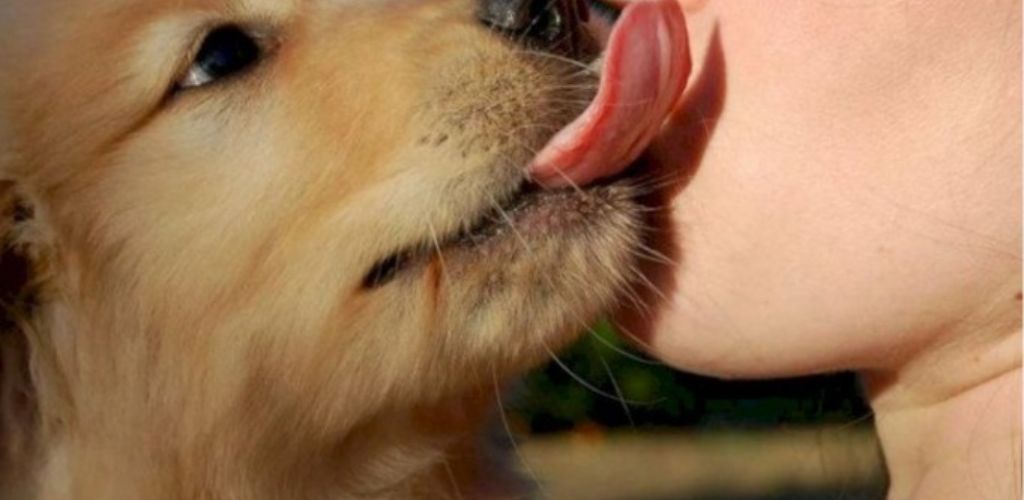
Dog licking is a natural and varied behavior that is often misunderstood. When a dog licks your face or hands, he is trying to tell you different things. It is a form of communication based on instinctive behavior.
Here are the most common reasons and what they really mean:
Expression of affection and bonding (proof of love)
This is often the most obvious and common reason.
Origin: Dogs are licked by their mothers when they are puppies. It serves as a cleaning agent, but above all it serves to care, build bonds and express affection. Dogs transmit this behavior to their “pack members”, that is, to us humans.
Sign: “I love you”, “I am happy that you are here”, “You are part of my pack”. Licking the face, in particular, is often interpreted as a sign of friendship and trust.
Attention-seeking
Dogs quickly learn which behavior elicits the desired response.
Origin: If your dog notices that you are getting his attention by licking him (petting, talking, smiling), he will repeat this behavior.
Signal: “Hey, look at me!”, “I want to play!”, “Give me a hug.”
It tastes good! (Taste and smell)
Sometimes the reason is as simple as taste.
Origin: Human skin, especially after sweating, can have a salty taste, which is attractive to dogs. The individual smell of a person is also fascinating to dogs.
Signal: “You smell/taste interesting!”, “What did you eat?”, “I am exploring you and your surroundings.”
Soothing and relaxing
Licks can be a sign of submission or a desire for harmony.
Origin: In a pack, lower-ranking dogs lick the muzzle of higher-ranking dogs to show respect and submission. This behavior can also serve as a calming signal when the dog is insecure or perceives a tense situation (e.g. when you scold him or her or when he or she is stressed).
Signal: “I have good intentions”, “Please don’t be angry”, “I want to calm you (and myself) down”. Dogs also lick themselves to calm themselves in stressful situations (e.g. at the vet).
Instinctive begging for food
This behavior is especially pronounced in puppies.
Origin: Puppies lick their mother’s face to encourage her to vomit pre-digested food.
Signal: “I’m hungry”, “Give me something to eat”. This behavior can also be transferred to humans, especially if the dog has learned that licking brings food.
Exploring the Environment
Dogs use their tongue and sense of smell to gather information about their environment.
Origin: The tongue is an important sensory organ for dogs. Licking allows them to absorb smells and tastes, better understanding their environment.
Sign: “I am gathering information about you and the world around me.”
When does licking become a problem and what should I do?
Although licking is a natural behavior, in some cases it can become excessive or cause hygiene problems.
Excessive licking: If the licking seems compulsive or is accompanied by other signs of stress (whining, shaking), it may be a sign of anxiety or obsessive-compulsive disorder. In these cases, it is advisable to consult a veterinarian or animal behaviorist.
Hygiene: Dog saliva contains bacteria. Although the risk of serious infection is low, it is advisable to avoid direct contact with the dog’s mouth (especially mucous membranes such as the mouth or eyes), especially for young children, the elderly or people with weakened immune systems. Always wash your hands thoroughly after “mouthing”.
Direct unwanted behavior: If you consider the licking excessive:
Ignore it: If your dog is seeking attention by licking, ignore it until it stops. Turn away and give your dog attention only when he stops licking.
Offer alternatives: Offer your dog a toy or chew to keep his mouth area occupied.
Positive reinforcement: Reward your dog when he stays calm and stops licking to encourage the desired behavior.
In short, licking is often a positive sign of affection and communication. By understanding the different nuances of this behavior, you can further strengthen your bond with your dog and better identify his needs.