
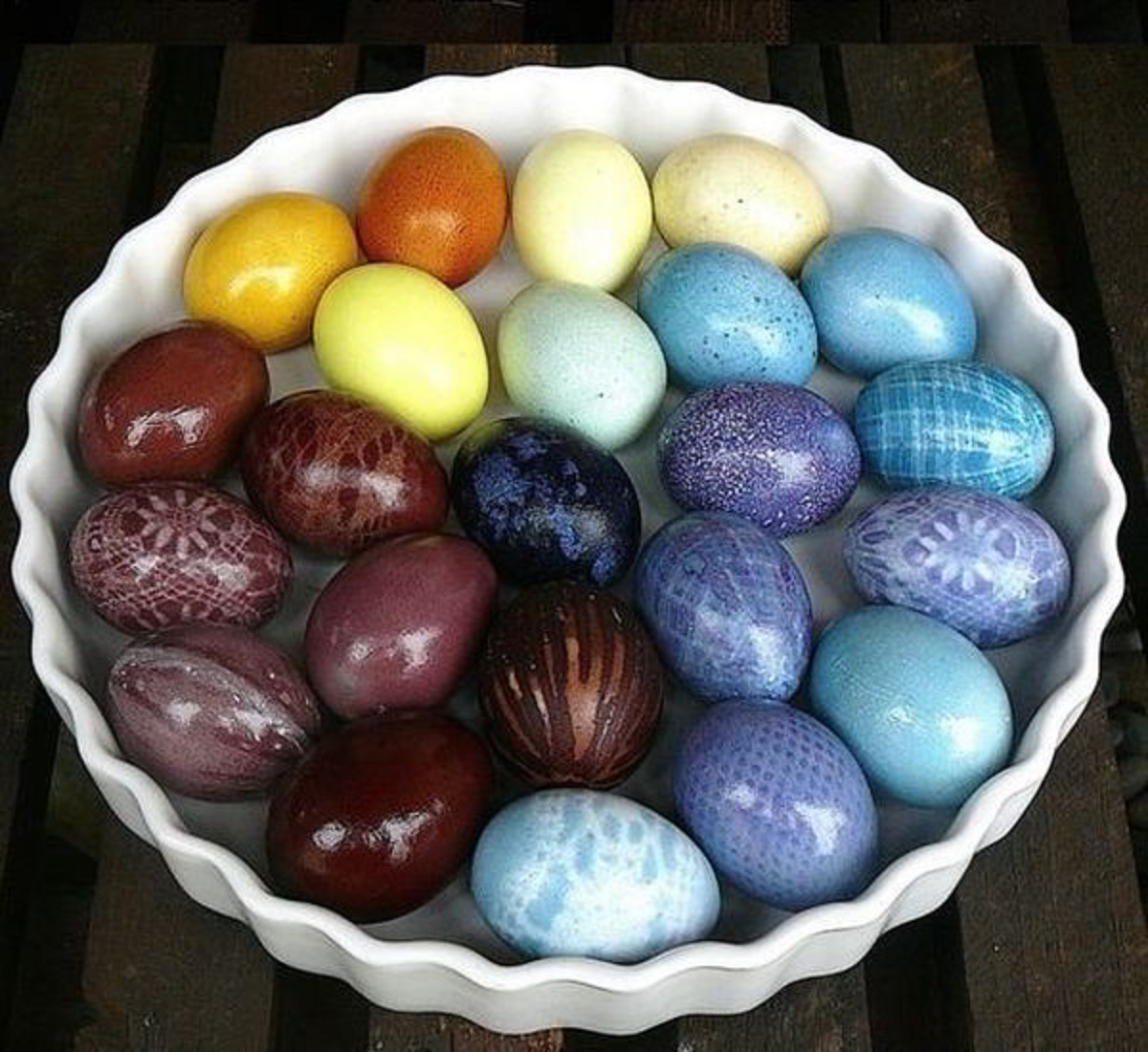
Almost everyone knows the method of dyeing eggs with onion skins. But few people suspect that Easter eggs can take on other shades—green, red, yellow, and even blue—with the help of natural dyes, which do exist.
The most important thing to consider is that the intensity of the color is directly proportional to the amount of pigment and the time of painting. By the way, ecologically dyed eggs can be easily supplemented with patterns. You need to take care of this aspect even before painting.
ROLE MODELS
One of the simplest methods of applying patterns involves the use of rubber bands for money.


The onion skins give the eggs a reddish-brown hue. Our grandmothers started collecting them early, and in order to get a model, they fixed a leaf or a blade of grass, which they liked, on the egg shell.

You can also get figures of any degree of difficulty with the help of a wax pencil or a candle: the places, where the eggshell comes into contact with the wax, remain light in color after painting.
THE COFFEE
Ground coffee gives the eggs a brownish hue.

BEET
Beetroot dyes the eggshell red with purple hues.

If you reduce the concentration of dye, you can easily achieve a deep pink.

NETTLES/SPINACH
Using nettles or spinach will give you green eggs.
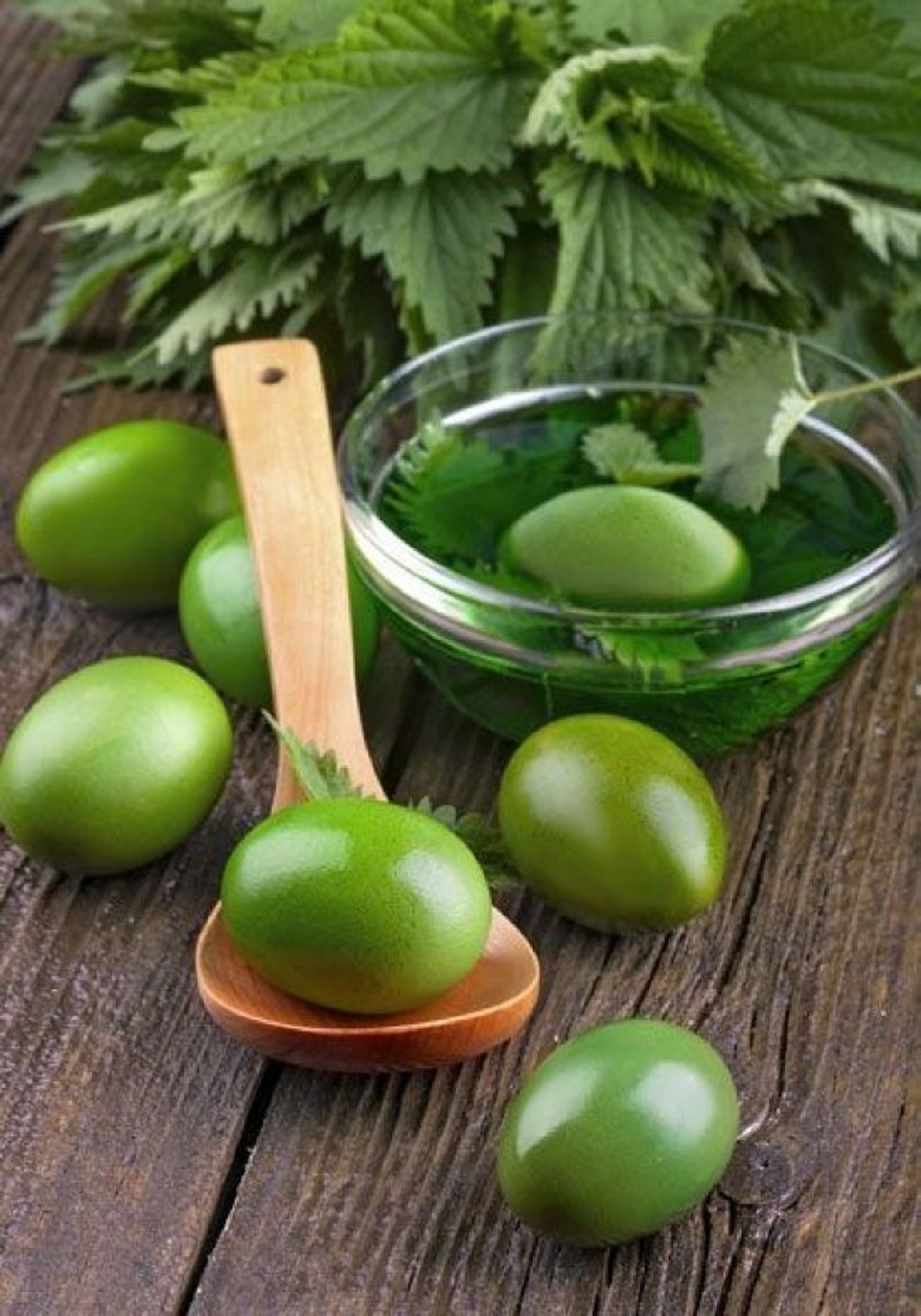
If the concentration of the dye is low, the peel will take on a light shade of raw green.

RED CABBAGE
Pay attention! Red cabbage is insidious: when used, it does not color the eggs pink or red, but blue or turquoise. You can easily get the blue color with the help of black Aronia berries, but they must be frozen from autumn.

CURCUMA
Turmeric colors the eggshell yellow.

If you’ve decided to use eco-friendly egg dyeing methods, don’t forget to save this little one! We hope you find it useful!

Happy celebrations!