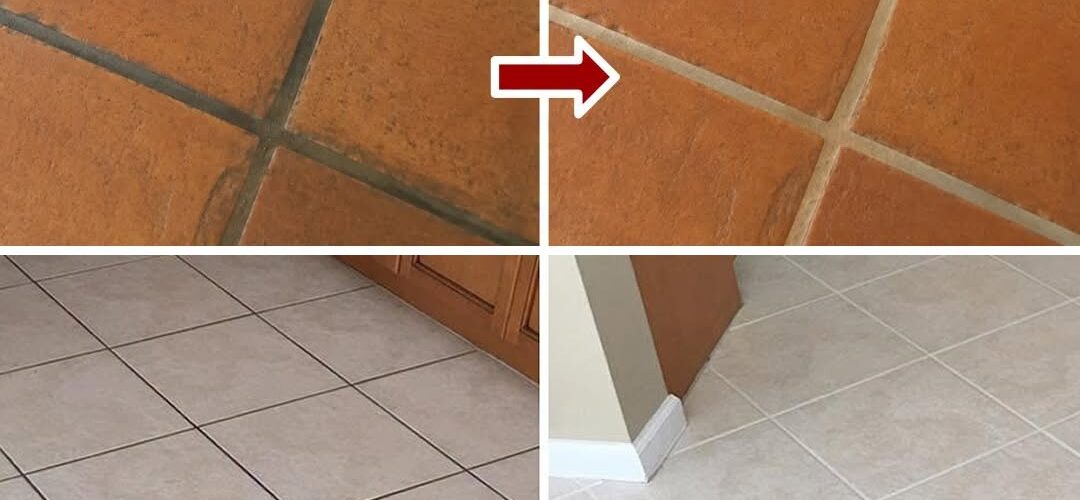
Black discoloration on floor grout and cement joints is usually caused by deep-seated dirt, grease, or mold growth. The right cleaning agent depends on the cause.
Choosing the right product based on the cause
For mold (localized black spots): Hydrogen peroxide (3%), washing soda, or a chlorine-based mold cleaner.
For grease and general dirt: A thick paste made of baking soda and water (3:1 ratio).
Note on acids: Do not use vinegar essence or citric acid on cement-based grout, as the acid breaks down the lime content and causes the grout to disintegrate.
Preparation and safety: Wear gloves and ensure proper ventilation.
Put on protective gloves and ventilate the room well. First, test the cleaning agent in an inconspicuous corner.
Apply the cleaning agent:
Mix baking soda with a little water to form a paste, or spray the mold cleaner directly onto the black spots in the grout.
Let it sit:
Allow the product to work for 15 to 30 minutes so it can penetrate deep into the porous structure of the grout. Scrub thoroughly:
Work the product into the grout using a grout brush or an old toothbrush, applying firm pressure and using a circular motion.
Rinse and dry:
Wipe away loosened dirt and cleaning residue with clean, warm water. Allow the area to dry completely.
Prevention
To prevent the grout from turning black again, apply a breathable grout sealer after cleaning. This seals the cement’s pores and prevents dirt and moisture from penetrating.