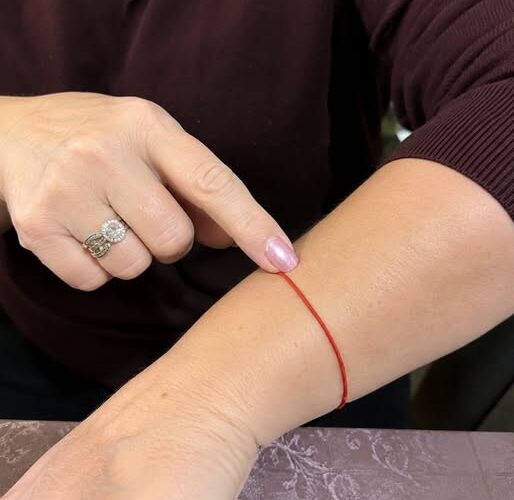
The red thread on the wrist has become one of the most widespread amulets in the world. It is worn by celebrities, athletes and ordinary people. Although for many it is just a fashion accessory, its history and meaning are deeply rooted in spiritual traditions.
Let’s see where this custom comes from, what it symbolizes and how to wear it correctly.
Origin and meaning of the red thread
The red thread appears in various cultures and religions, each of which attributes a slightly different meaning to it:
Kabbalah (Jewish mysticism): The most famous meaning comes from Kabbalah. The thread is associated with the tomb of the ancestor Rachel, which is considered a symbol of love, protection and maternal devotion. It is worn as protection against the “evil eye” (evil wishes, envy, and negative energy from others).
Buddhism and Hinduism: In these traditions, the red (or sacred) thread is called, for example, Kalava or Jani. It symbolizes blessing, spiritual purity, protection, and connection with the divine. It is often tied during religious ceremonies and acts of reverence.
Slavic folklore: In folk medicine, red wool was tied around the wrists or ankles to protect against witchcraft and disease, to improve blood circulation, or to relieve joint pain.
Which hand should the thread be worn on?
The hand you wear the thread on determines what energy you attract:
Left hand (receiving side): The traditional choice for protection. In spiritual teachings, the left side of the body is considered the “receiving” side – energy from the outside world flows through it into the body and soul. The red thread on the left wrist acts as a shield that captures and deflects negative energy, envy and curses before they can harm you.
Right hand (giving side): The right side is considered the “giving” and active side.
Left hand (giving side): It is often worn in some Eastern traditions (e.g. by single women in Hinduism) or when a person wishes to attract luck, success and prosperity and radiate positive energy.
How to tie it correctly?
In order for the thread to work as an amulet, it is recommended to follow a few simple steps:
Material: The thread should be made of pure natural wool. In mythology and traditional medicine, wool is believed to have special protective properties.
Who should tie it? The thread should not be tied by someone you don’t trust. Ideally, it should be tied by someone close to you who truly loves you and wishes you only the best (partner, mother, best friend).
Seven knots: When tying a thread, seven knots are usually made. Each knot symbolizes a spiritual dimension or wish. While tying, you (and the person tying the thread) should silently wish for protection, health, and peace, or recite a short prayer or mantra.
Material: The thread is usually tied by someone you are close to, someone who truly loves you and wishes you only the best (partner, mother, best friend).
Seven knots: When tying a thread, seven knots are usually made. Each knot symbolizes a spiritual dimension or wish. What to do if the thread breaks or gets lost?
If the red thread breaks, comes loose, or is lost on its own, there is no need to panic.
What it means: According to tradition, this means that the thread has fulfilled its purpose – it has absorbed negative energy until it reaches its capacity, or it has simply protected you from the strong influence of negative energy.
If you find that the thread is broken, do not glue it or try to retie it. Give thanks for its protection and safely dispose of it (or burn or bury it). You can tie a new thread if you wish.