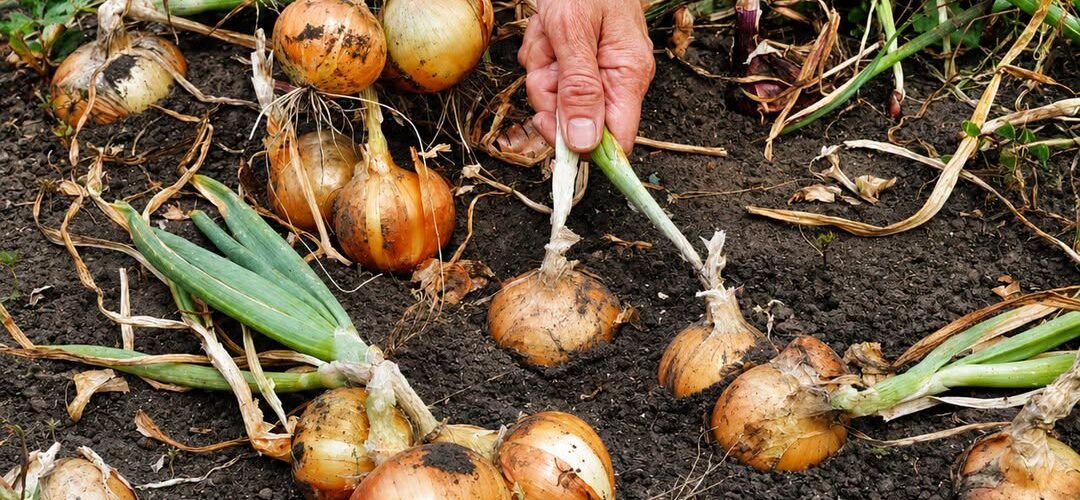
When garlic and onions are harvested (usually between June and August), they leave behind a wonderfully loosened bed, which often even retains some protection against soil fungi and pests.
Since both members of the allium family are medium feeders, the soil isn’t completely depleted. Now is the perfect time for a second planting (follow-up crop). To ensure that the vegetables grow particularly large, strong, and healthy, you should focus on light feeders and fast-growing autumn crops.
The best vegetables for the vacant bed
- Radishes & Daikon
Why they grow large & healthy: Radishes are the ultimate sprint champions. After garlic and onions, the soil is perfectly drained.
Sowing: July to September (harvest often after just 3 to 4 weeks).
Tip: Keep the soil consistently moist to prevent it from becoming woody or too pungent in the summer sun.
- Spinach
Why it grows big & healthy: Spinach thrives in the cooler late summer and autumn air. It thrives on the remaining nutrients in the soil left over from other members of the onion family.
Sowing: August to September.
Tip: If you choose a hardy variety (like ‘Matador’), you can harvest in late autumn and leave the plant in the garden bed for an extra early harvest the following spring.
- Lettuces (e.g., lamb’s lettuce, endive, loose-leaf lettuce)
Why they grow big & healthy: Lettuces are light feeders and easily thrive on the remaining nutrients in the garden bed.
Sowing: July to September (lamb’s lettuce even until October).
Advantage: Lamb’s lettuce loosens the soil deeply with its roots and attracts beneficial earthworms.
- Carrots
Why they grow big & healthy: This is the absolute classic of companion planting! The scent of onion and garlic remnants in the soil effectively repels the dreaded carrot fly.
Sowing: A late sowing in July/August ensures tender, sweet autumn carrots.
- Asian greens & bok choy
Why they grow big & healthy: These trendy vegetables love the shortening days of late summer. Too much heat causes them to bolt (go to seed), but they find optimal conditions after the garlic harvest in late summer.
Sowing: August to September.
3 golden rules for success
Most important rule (cropping break): After garlic and onions, do not sow other members of the allium family (such as leeks, chives, or more onions) in the same spot. Leave a 3- to 4-year break between plantings to prevent diseases and onion fly infestation.
Prepare the soil briefly: After harvesting, lightly rake the bed and remove weeds. A tiny amount of mature compost is perfectly sufficient – you don’t need to add fresh fertilizer for the aforementioned light feeders.
Exclude legumes: While peas and bush beans are excellent light feeders, they don’t biochemically tolerate the root exudates of Allium plants (garlic/onions) well. It’s best to plant them in a different bed.