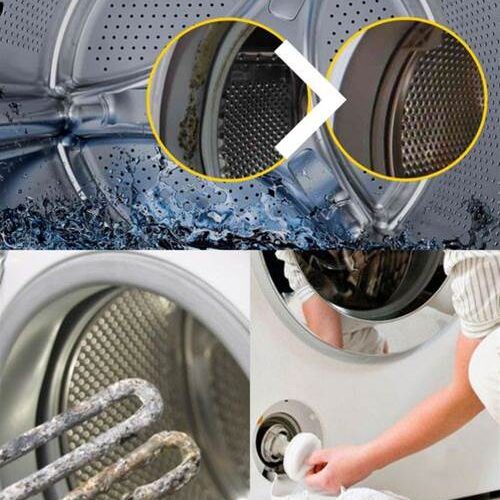
A washing machine full of mold and limescale inside not only looks unsightly, but in the long run it ruins clothes and reduces energy efficiency. The best “miracle cure”, which is also used in a modified form by professionals (such as those in laundromats), is a combination of acid (for limescale) and chlorine or oxygen bleach (for mold).
Since these ingredients should never be mixed (danger of toxic chlorine gas!), the best way to clean your washing machine is in two targeted steps.
Here is the perfect guide to making your washing machine shine like new again:
Step 1: Destroy the mold (disinfect)
Mold thrives in the warm and humid environment of rubber seals and the detergent dispenser. The best solution in this case is citric acid (for the drum) and a targeted hygiene cleaner or mold remover (for the seals).
Clean the rubber seal: Mix warm water with a little dishwashing detergent or use a special mold remover. Wipe the folds of the rubber seal thoroughly. Hair, lint and black mold often collect here.
Detergent drawer: Pull the drawer out completely. It is usually easy to remove by pressing the small lever inside the drawer. Scrub it in the bathtub or sink with an old toothbrush and vinegar detergent. Don’t forget to wipe the top of the inside of the washing machine as well (mold often grows there from fabric softener residue).
Step 2: Intensive wash cycle (against limescale and deep-set dirt)
To remove limescale and bacterial biofilm from the internal hoses, heating elements and drum, we use the best home duo: citric acid and powder detergent.
Why citric acid instead of vinegar?
Pro tip: Laundromats and technicians do not recommend using vinegar. Acetic acid is too aggressive for the rubber seals and hoses inside the washing machine. Citric acid is gentler on fabrics, smells better and is extremely effective in dissolving limescale.
Proceed as follows:
Pour approximately 100-150 g of pure citric acid (in powder form) directly into the empty drum.
Add powder detergent (not liquid!) to the dispenser drawer. Powder detergents contain oxygen-based bleaching agents that kill bacteria and mold at high temperatures.
Run a hot wash cycle (90°C or 95°C) without laundry and without pre-wash.
Optional tip: Halfway through the cycle (when the water is hot), set the washing machine to pause for 30 minutes to allow the citric acid to properly dissolve the limescale, then let the program finish.
Result in comparison
Problem Before cleaning After professional method
Heating elements and drum Clogged with limescale, uses more energy Sparkling clean, limescale-free, full heating power
Odour Musty, putrid, mouldy Neutral and fresh
Rubber seals Black mould stains, slime Clean and elastic
3 golden rules for the future (To keep it that way)
Self-service washing machines rarely have problems with mould because the machines in them are constantly in operation and can dry out. At home, you should observe the following:
Leave the door and drawer open: After each wash, leave the loading door and detergent drawer slightly ajar to allow residual moisture to escape.
Monthly hot wash: Wash bed linen or towels at least once a month at 60°C or 90°C with powder detergent. Modern eco-friendly programs with low temperatures (30°C – 40°C) are a haven for bacteria.
Cleaning the lint filter: Every few months, open the small flap at the bottom of the washing machine, let the remaining water drain out and clean the lint filter.