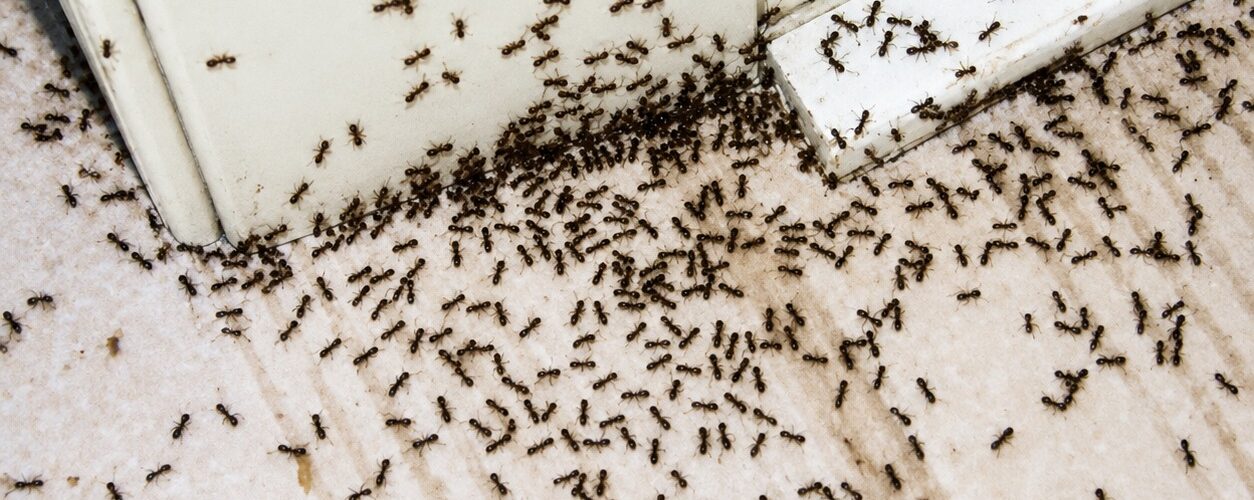
It’s completely understandable that chalk and baking soda didn’t work for you – and you’re not alone. Both home remedies are based on myths that, while they persist, simply ignore the biology of ants.
If you want to get rid of ants permanently and effectively, only a strategic approach that addresses the real problem at its root: the queen and the nest will help.
Here’s a tip that everyone should know in order to sustainably combat ants in their home:
Why Chalk and Baking Soda Often Fail
Chalk Myth: Chalk (or cinnamon) is supposed to create barriers because ants don’t like its texture or smell. This is true in the short term, because it interrupts their scent trail. But ants are extremely intelligent and adaptable: They either simply walk around the chalk line, find a gap, or jump over it as soon as the chalk has dispersed.
Baking powder myth: It is often claimed that ants eat baking powder and “pop” it. This is not biologically true. Ants usually do not swallow pure baking powder at all. Even when it is mixed with powdered sugar, only a few workers often die, while the nest and queen remain completely intact.
Golden tip: The “Trojan horse” principle
It is not enough to kill the visible workers in the kitchen to permanently stop an ant infestation. As long as the queen is laying eggs in the nest, she will produce hundreds of new ants every day.
The key tip is: Take advantage of the ants’ natural instinct to feed on themselves with a slow-release agent.
Use professional ant baits (gels or bait stations)
Unlike home remedies, professional ant baits (often with active ingredients such as spinosad or imidacloprid) contain an attractant in combination with a slow-acting poison.
The worker ants do not eat the bait immediately, but take it back to the nest.
There, the food is distributed to the larvae and – most importantly – the queen through social feeding (trophallaxis).
It is only after a few days that the population in the nest decreases.
Consistently remove food sources
Ants are explorers. If they don’t find anything, the colony will move on.
Provide sugar and protein: Store food (sweets, pet food, jars of honey) in completely airtight containers.
Remove the tracks: Thoroughly wipe down old ant tracks with a vinegar-based cleaner or dishwashing liquid. This will destroy the pheromone trails (smell guidance) so latecomers can’t find their way back.
Seal entry points
Watch carefully for where ants are entering your home (usually small cracks around windows, baseboards, or cable entryways). Seal these weak spots thoroughly with silicone or acrylic to create physical barriers.
If you follow this three-pronged approach of delayed baiting, sanitation, and sealing, you can usually get rid of your infestation permanently within one to two weeks.