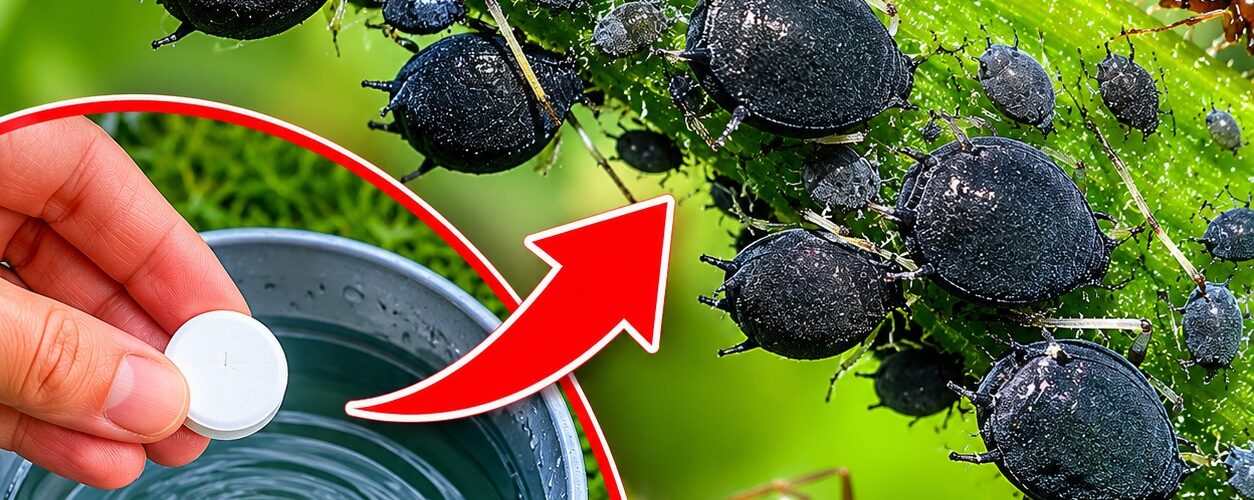
This typical “garden miracle tip” has been circulating on the internet for years and usually promises salvation with a single tablet – often referring to aspirin (acetylsalicylic acid) or paracetamol.
However, the claim that aphids will die “INSTANTLY” and a “miracle” will occur unfortunately doesn’t quite correspond to biological reality. Here’s the fact check: What’s really behind it, why caution is advised, and which alternatives actually help.
The fact check: What do these tablets really do?
- Aspirin (Acetylsalicylic acid)
The theory: Acetylsalicylic acid is related to the plant hormone salicylic acid. This hormone signals stress to the plant (e.g., due to pest infestation) and boosts its own immune system.
The reality: A low-dose aspirin solution can indeed strengthen a plant’s defenses (making it more resistant to fungi or heat). However, it is not an immediate insecticide. Aphids will not die instantly from it. Furthermore, an overdose can burn the leaves and severely damage the plant.
- Paracetamol or Ibuprofen
The reality: These painkillers are completely useless in the garden. They do not combat pests, nor do they strengthen plants. On the contrary, they unnecessarily pollute the soil and groundwater.
Why “instant miracles” rarely work in the garden
If pests die instantly from a home remedy, it is usually due to a highly corrosive or suffocating effect. Pure painkiller tablets do not possess these properties.
Furthermore, always remember in the garden: What aggressively kills pests often also harms beneficial insects like ladybugs, lacewings, or bees.
3 Home Remedies for Aphids That Really Work
If you want to rid your crops and flowers of aphids effectively and in an environmentally friendly way, try these tried-and-tested methods:
- The Soft Soap Solution (The Classic)
Soft soap clogs the aphids’ airways, causing them to die quickly and reliably.
Recipe: Add 15 to 200 ml of liquid soft soap (without fragrances or additives) to 1 liter of lukewarm water.
Application: Spray the plant (especially the undersides of the leaves) until dripping wet. Do not use in direct sunlight, as this will burn the leaves.
- Rapeseed Oil Mixture (Suffocating Effect)
Oil forms a thin film under which the aphids can no longer breathe.
Recipe: Shake approximately 50 ml of rapeseed oil vigorously with 250 ml of water and a small squirt of dish soap (as an emulsifier to help the oil and water mix).
Application: Spray onto the affected areas. Ideal for stubborn infestations on robust plants.
- Nettle Manure or Decoction (Strengthening & Defense)
Nettles contain silica and formic acid. They repel aphids and strengthen the plant at the same time.
Recipe (Decoction): Soak 100 g of fresh nettles in 1 liter of water for 24 hours (do not allow to ferment).
Application: Spray the undiluted decoction onto the plants.
Tip for edible plants: When treating vegetables and herbs, you should completely avoid chemical experiments or medications, as these substances can be absorbed into the plant through the roots and ultimately end up on your plate. The soft soap or oil method is the safer choice here.