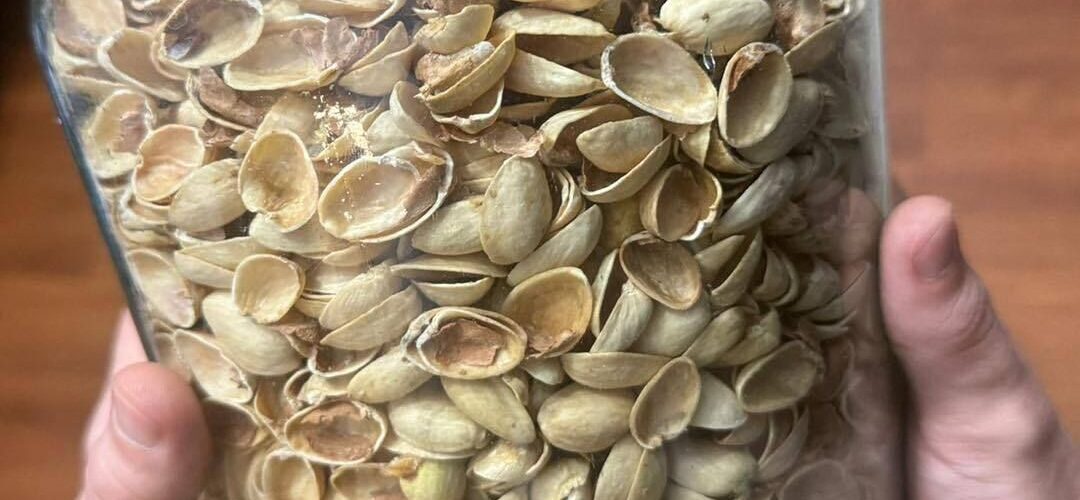
That’s right! Most people eat the delicious green nuts and simply throw the rest away. But pistachio shells are a true treasure trove for the garden and home. Unlike eggshells, they don’t decompose as quickly in the soil and therefore don’t provide nutrients immediately. Their special value lies in something else entirely.
An important tip before using them: If you’ve eaten salted pistachios, rinse the shells thoroughly with water beforehand and let them dry. Salt is harmful to plants.
Here’s how to make the most of the shells in your garden and home:
Perfect drainage for flower pots
Forget expanded clay pebbles. Pistachio shells are ideal as a drainage layer at the bottom of flower pots (both indoors and outdoors).
Here’s how it works: Sprinkle 2–3 cm of pistachio shells on the bottom of the planting container before adding soil. The shells ensure that excess water can drain away, preventing root rot and keeping the soil aerated.
Natural mulch that lasts for years
Because pistachio shells are hard and decompose very slowly, they are excellent as an aesthetically pleasing mulch.
Here’s how: Sprinkle the shells in an even layer on the soil surface in flowerpots or around smaller plants in the garden bed.
Benefits: The mulch retains moisture in the soil, inhibits weed growth, and looks great.
Organic barrier against slugs and pests
Slugs avoid sharp and uneven surfaces. Similar to eggshells, pistachios can make life difficult for slugs.
Here’s how: Scatter crushed or whole shells in a larger circle around plants that slugs particularly like to eat (e.g., hostas or young lettuce). This terrain is impassable for slugs.
Protection from pets
Do you have a cat that likes to dig up flowerpots or a dog that’s interested in houseplants?
Here’s how: Cover the soil surface in the pot with a thick layer of pistachio shells. Animals find it unpleasant to climb on or dig in the shells and will therefore leave your plants alone.
What to do with the shells when they’re no longer needed?
If you have a lot of shells and don’t want to put them in flowerpots, throw them on the compost heap. Although it takes several years for them to decompose completely, in the meantime they naturally contribute to aerating the compost, which speeds up the decomposition of other organic waste.