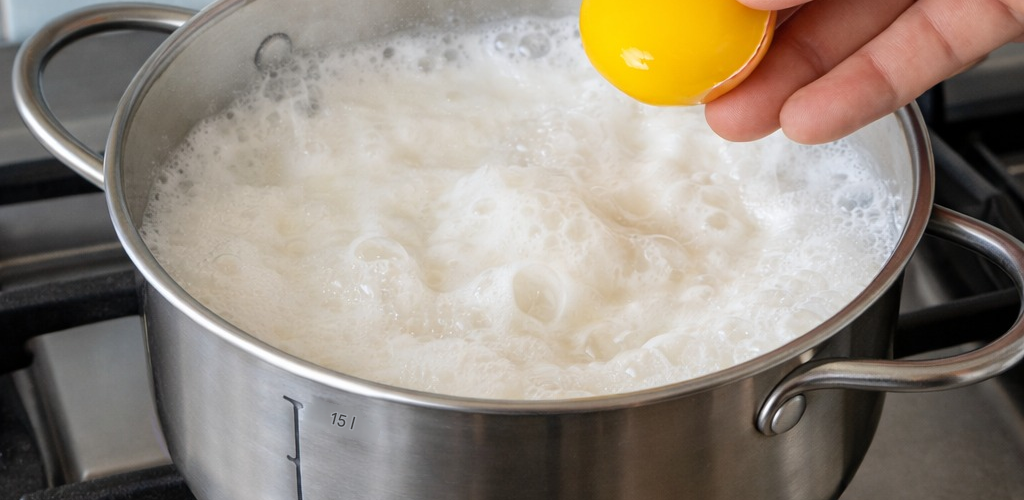
Behind this typical social media title lies not a fake, but a centuries-old, fascinating recipe from rural cuisine: You can make your own fresh cheese in less than 30 minutes!
Specifically, the result is a mild, firm fresh cheese strongly reminiscent of Indian paneer, Cypriot halloumi, or Eastern European twarog. The whole process works completely without chemical additives or rennet.
Here’s the astonishingly simple principle behind it:
The physical secret: Why does it work? Milk consists largely of water, fat, and the milk protein casein. Normally, the casein is finely dispersed in the milk. When you add an egg and an acidic component (such as lemon juice, vinegar, or sour cream) to boiling milk, the following happens:
Coagulation (denaturation): The combination of heat and acid causes the milk protein to coagulate and curdle.
Separation: The protein binds with the fat and completely separates from the water. This results in solid curd and liquid, yellowish whey. The egg provides additional binding, a great consistency, and a beautiful, slightly yellowish color.
DIY Instructions: 30-Minute Cheese
What you need:
1 liter of whole milk (preferably fresh milk, not UHT milk)
2 to 3 eggs
200 g sour cream, crème fraîche, or natural yogurt (for the necessary acidity)
1 teaspoon of salt (add herbs, chili, or garlic to taste)
It’s that easy:
The egg mixture: Whisk the eggs thoroughly with the sour cream (or yogurt) and salt in a bowl.
Boil the milk: Bring the milk to a boil in a large saucepan. Be careful not to let it burn.
Combine: Once the milk is boiling, reduce the heat slightly and slowly pour in the egg and cream mixture, stirring constantly.
Curl: Let the mixture simmer gently over low heat for about 5–7 minutes. You will see the milk separate almost instantly into solid, white curds (cheese) and a clear liquid (whey).
Drain and press: Line a sieve with a clean kitchen towel (or cheesecloth) and pour the contents of the pan into it. The whey will drain away, leaving the cheese in the cloth.
Shape: Fold the cloth tightly over the cheese, place a heavy object (such as a pot of water) on top to weigh it down, and let it cool.
After about one to two hours in the refrigerator, the cheese is firm enough to slice, delicious on bread, or—similar to halloumi—even wonderfully pan-fried, as the egg prevents it from melting too easily when heated.
Why is this recipe so rare these days? It used to be the perfect way to preserve surplus milk and eggs on the farm. Since we can now buy cheese of every kind cheaply in the supermarket, this “family secret” has simply been forgotten.
Have you seen the video on YouTube or TikTok and wondered if it actually turns out to be edible cheese, or did you want to try it yourself?