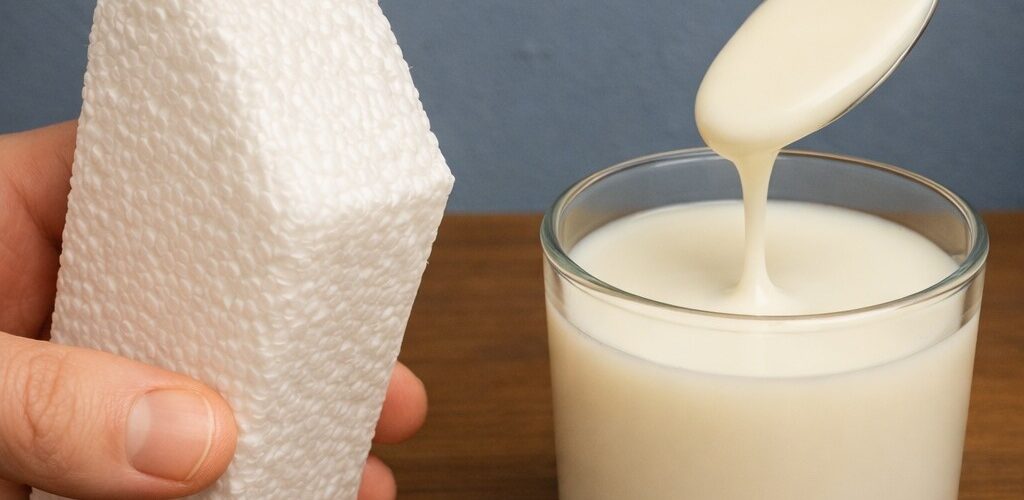
And here it is again: the classic, fiery social media headline! But unlike some other internet trends, the “Styrofoam secret” hides an extremely fascinating DIY project that actually works.
The next time you unpack an electrical appliance and are faced with huge piles of white Styrofoam (EPS), don’t throw it in the recycling bin. You can make a super-strong, waterproof adhesive, varnish, or filler from it.
You probably already have the “magic ingredient” you need at home.
The physical “miracle”: Styrofoam + Acetone
Styrofoam consists of about 98% air, which is trapped in a thin polystyrene shell. When it comes into contact with pure acetone (or acetone-based nail polish remover), the following happens: The acetone dissolves the plastic. The air escapes in seconds, and the polystyrene melts seemingly by magic into a viscous, sticky mass.
What you need:
Styrofoam scraps (clean and dry)
Pure acetone (available for a few euros at hardware stores)
A screw-top jar (made of glass – acetone eats through almost all plastics!)
An old wooden stick for stirring
DIY instructions: How to make the all-purpose glue
Safety first: Please only do this outdoors or with a window wide open. Acetone fumes are highly flammable and irritate the respiratory system. It’s best to wear gloves.
Pour in the acetone: Pour a small amount of acetone (about 2–3 centimeters high) into your jar.
“Feeding” the Styrofoam: Break the Styrofoam into pieces and press them into the acetone. It will immediately shrink with a hissing sound. Continue adding Styrofoam until a viscous mass forms (similar to honey or liquid plastic).
What can you do with this DIY Styrofoam glue?
Once the acetone evaporates in the air, the mass hardens back into rock-hard, completely waterproof polystyrene plastic. This makes it extremely versatile:
The super-tough outdoor adhesive: Perfect for gluing clay pots, broken tiles, or concrete figures in the garden. The adhesive is completely weatherproof and frost-resistant.
Waterproof sealant: You can brush the liquid mass onto wood or clay like varnish to protect the material from moisture.
Crack filler: If you mix the mass to a slightly thicker consistency (like modeling clay), you can use it to fill holes or cracks outdoors. After it hardens, it can be sanded and painted over.
A slight damper on the environmental euphoria
Even though the idea is ingenious, we have to be honest: Strictly speaking, it’s not true ecological “upcycling.” Acetone is a chemical solvent that escapes into the environment when it evaporates. So, this method isn’t suitable for large-scale use – but it’s a brilliant life hack for making good use of small amounts of packaging waste and saving you the expense of buying specialty adhesive at the hardware store.
Did you happen to see this Styrofoam trick in a video on TikTok or Instagram and wanted to know if it really works, or are you already planning a specific project in your garden?