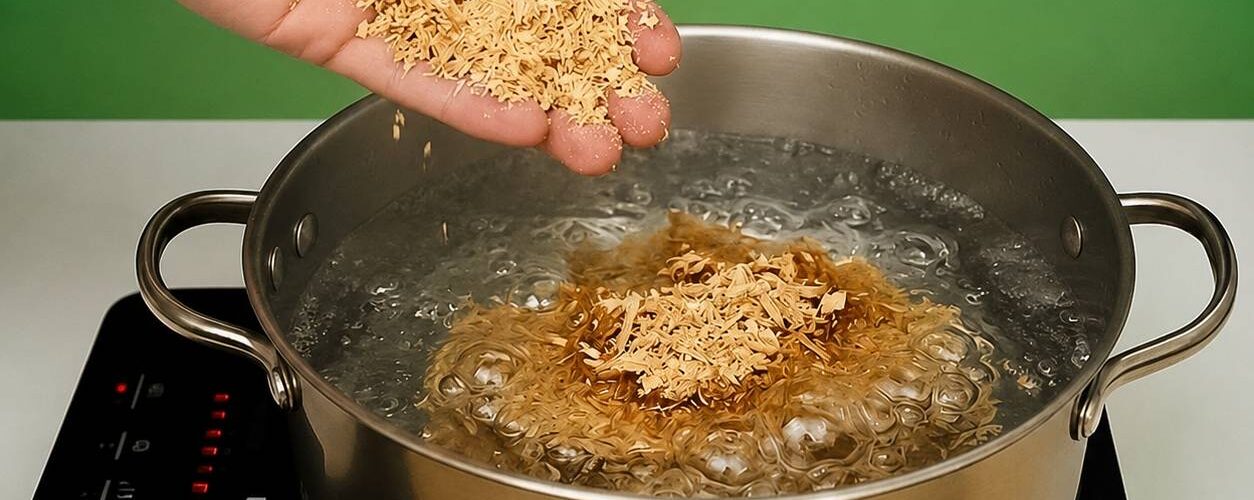
Of course, this sounds like the typical title of a YouTube video or a clickbait article promising quick riches overnight. The truth is: Billions definitely aren’t making money with it, but sawdust (or wood shavings) is actually an extremely valuable and highly sought-after raw material in industry.
This isn’t magic, but a classic example of upcycling – how to make real money from a supposed waste product of the wood industry.
Here are the real ways to make money with sawdust on a large scale:
- The Biggest Business: Wood Pellets and Briquettes
This is the absolute mega-market for sawdust. Loose sawdust is difficult to transport and burns too quickly.
The Process: The sawdust is dried and pressed into pellets or heating briquettes under extremely high pressure (without artificial binders, only using the wood’s own lignin).
The Market: Due to the energy transition and the demand for renewable resources, the global need for wood pellets is enormous. Large sawmills often have their own pellet plants right next door because they generate tons of sawdust as waste.
- Animal Bedding (Pet Supplies & Agriculture)
Do you have a guinea pig, a hamster, or a horse? Then you’ve most likely already spent money on sawdust.
Sawdust is extremely absorbent and odor-binding.
Cleaned, dusted, and packaged, this waste product from the woodworking shop becomes an expensive premium product in pet stores. Horse farms and poultry farms, in particular, consume huge quantities of it.
- The Materials Industry (Particleboard & MDF)
Almost every modern piece of furniture (from IKEA to designer shelves) consists primarily of sawdust and wood shavings.
Particleboard (MDF/HDF): Sawdust is mixed with synthetic resin, pressed into shape, and coated. Without sawdust, there would be no affordable furniture industry.
- Smoking sawdust for the food industry
Ham, salmon, or smoked cheese – the typical flavor comes from the smoldering of special sawdust.
However, not just any wood is suitable: Fine, untreated sawdust from beech or oak is particularly popular and commands a high price.
- Innovative niches: Mushroom cultivation and bioplastics
Gourmet mushrooms: Mushrooms like shiitake or oyster mushrooms thrive on substrates made from sawdust.
WPC (wood-plastic composites): A modern material for decking. Here, sawdust is fused with plastic. The result looks like wood but doesn’t rot.
Can the average person get rich with this?
If you have a small DIY workshop in your basement, you unfortunately won’t get rich with just a little sawdust – the effort involved in transport and cleaning is too high.
The “secret” lies in the sheer volume. For large sawmills and carpentry firms, sawdust is no longer waste that requires disposal fees, but rather an important, reliable source of income.
Have you seen this promise in an advertisement and wondered what it’s all about, or do you yourself have large quantities of sawdust that you’d like to put to good use?