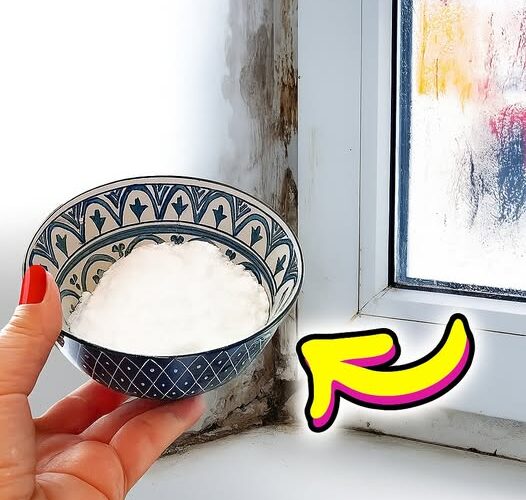
The problem of damp walls or fogged-up windows is annoying, but you don’t have to immediately invest in an expensive, energy-guzzling dehumidifier. The “ingenious trick” used by many professionals and thrifty homeowners is based on a simple physical principle and an ingredient that almost everyone has in their kitchen.
The salt trick: A natural magnet for water
The most effective and inexpensive way to draw moisture from the air is to use ordinary table salt. Salt is hygroscopic, which means it actively attracts water molecules from its surroundings.
What you need:
One to two kilograms of coarse table salt (or livestock salt from a hardware store).
An old container (e.g., a plastic bowl or an empty yogurt container).
A thin cloth (e.g., an old dish towel or a pair of nylon stockings).
How to Build Your Own DIY Dehumidifier
The Sieve Principle: Take a container and stretch the cloth over it, or drill small holes in the bottom of a plastic container, which you then place inside a larger bowl (so the water can drain away).
Add Salt: Put a generous amount of salt into the cloth or the upper container.
Place: Put the contraption in the affected corner, on the windowsill, or in a closet.
Wait: After some time, you will see the salt clump and eventually water drip into the lower container. When the salt is completely dissolved or saturated, simply replace it.
Pro Tip: If you want to increase the effect, use calcium chloride (often available as a substitute for road salt or in granular refill packs). It attracts moisture even more aggressively than sodium chloride (table salt).
Why This Works
In chemistry, this is called a saturated solution. The salt draws moisture from the air until it dissolves. For the math buffs: The relative humidity above a saturated salt solution is about 75% at room temperature. If the room humidity is higher, the water migrates into the salt.
Further helpful tips (completely free):
Proper ventilation: Open windows wide for 5 to 10 minutes instead of leaving them tilted open for hours. This exchanges the humid indoor air for dry outdoor air without cooling the walls.
Move furniture: Leave at least 5–10 cm of space between exterior walls and large pieces of furniture (like wardrobes) to allow air to circulate and prevent mold growth.
Plant check: Some houseplants (like snake plants or peace lilies) can regulate humidity, but too many plants increase humidity through evaporation.
Do you have a specific room that is particularly affected, or are you more concerned with general winter prevention?