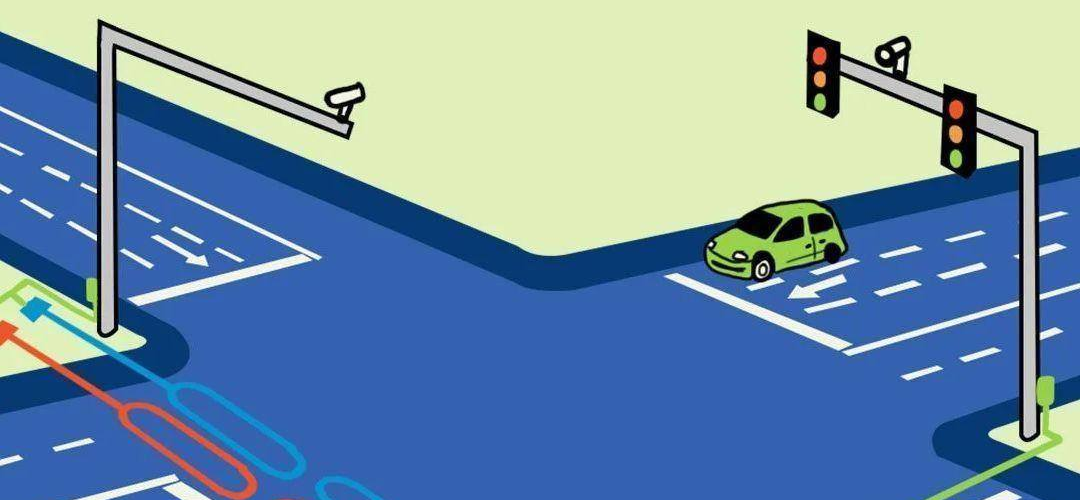
At first glance, this might sound like a secret tip for passing your driving test, but let’s put it into perspective: In reality, you should definitely not drive on the white line at intersections.
There are actually good reasons why crossing or driving in the middle of lines (such as the stop line or lane markings) should generally be avoided. Here’s the fact check:
- Lane Keeping (Why Stay Between)
Lane lines are there to organize the traffic flow. If you drive on the line:
Reduce the safe following distance to vehicles in the adjacent lane.
Risk of losing traction in wet conditions, as road markings (thermoplastic or paint) are often smoother than the asphalt.
You can trigger error messages from lane keeping assist systems.
- The Stop Line (Stop, don’t cross it!)
At a red light or stop sign, the white line marks the boundary.
Sensors: Many traffic lights are controlled by induction loops in the road surface. These are often located just before or directly at the line. If you drive too far over it, the system might not detect you at all – and you’ll wait forever for the light to turn green.
Sightline: The line is positioned so that you can see cross traffic and pedestrians optimally without becoming a hazard yourself.
- Motorcyclists beware!
Especially for motorcyclists, the white line is like an ice rink when it’s raining. Because the paint seals the pores of the asphalt, the water can’t drain away. If you accelerate or brake on the line while turning, you’ll slide out faster than you can say “stop.”
Where does this myth come from?
Perhaps you’re confusing it with the ideal racing line or the recommendation for cyclists to position themselves clearly at certain intersections?
Important note: The German Road Traffic Regulations (StVO) stipulate that you must drive on the right. The white line marks the end of your lane, not the center of your vehicle.
Did you hear this in a specific context, such as in relation to autonomous driving or a particular traffic pattern?