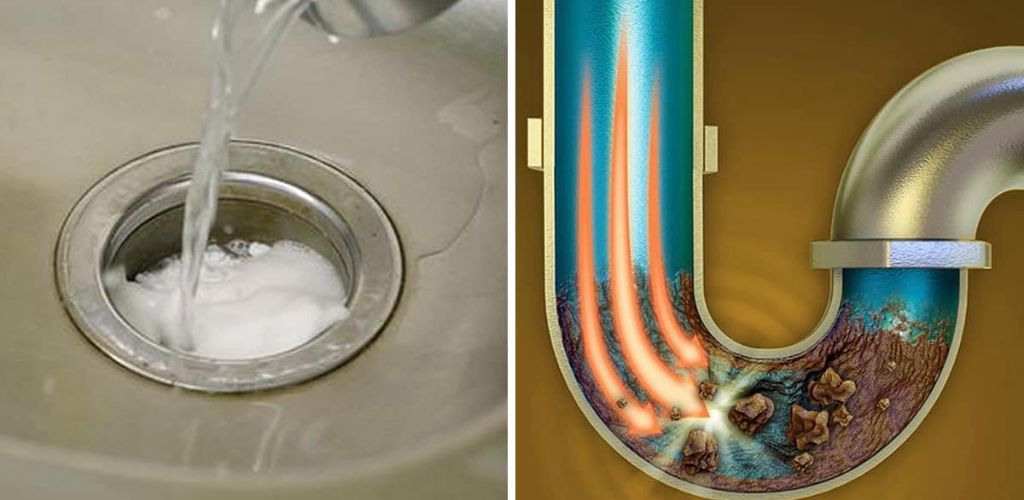
This trick is a favorite of professionals because it uses physics, not corrosive chemistry. While most people reach for baking soda and vinegar (which are great for odors but weak against tough clogs), the most effective way to unclog a drain in “seconds” is the pressure-vacuum method, which uses two simple household tools.
🚀 The “boiling pressure” trick
This method creates a vacuum and uses thermal expansion to instantly remove grease, hair, and soap scum.
📝 What you’ll need:
A can of boiling water
A plunger (the simplest “cup” for sinks works best)
Dishwashing detergent (a degreaser type, like Dawn)
A damp cloth
👩🍳 Step-by-step instructions
The lubricant
Pour a generous amount of dishwashing detergent directly into the drain. Let it sit for 2 minutes. The soap will break the surface tension of the grease and act as a lubricant for the materials stuck in it.
The heat shock
Pour about half a can of boiling water down the drain. This will soften the solidified grease and expand the pipes slightly.
The seal (the most important part)
If you have a double sink or overflow (that small hole near the top of your bathroom sink), you’ll need to plug it with a damp cloth. If air can escape through the overflow, the plunger won’t create the pressure needed to clear the clog.
The Pressure Stroke
Fill the sink with just enough warm water to cover the head of the plunger.
Position the plunger over the drain to seal it tightly.
Push down and pull up forcefully 10-15 times.
The Secret: Pulling up is often more effective, as it will pull the clog apart rather than compressing it further.
The Flush
Remove the plunger and pour in the remaining boiling water. The clog should “swish” away immediately.
🛠️ When the “snake” is the only way
If the pressure trick doesn’t work after two tries, the clog is probably a clump of hair or a solid object. Before you call a plumber, try this:
The zipper trick: Take a long plastic zip tie and use scissors to cut small diagonal notches (hooks) along the sides.
The fish: Stick it down the drain, then pull it back up. The hooks will catch hair and lint that the plunger can’t move. You can buy a plastic “drain snake” at most hardware stores for $2 that does exactly that.
💡 Why should you avoid liquid “drain cleaners”?
Chemical cleaners (like Drano) are heavy, corrosive, and can even damage pipes if left in because the clog is too thick for them to pass through. They generate heat, which can soften PVC pipes or cause leaks over time.
Could you explain the “P-trap” method in case the clog is deeper in the pipes, under the sink?