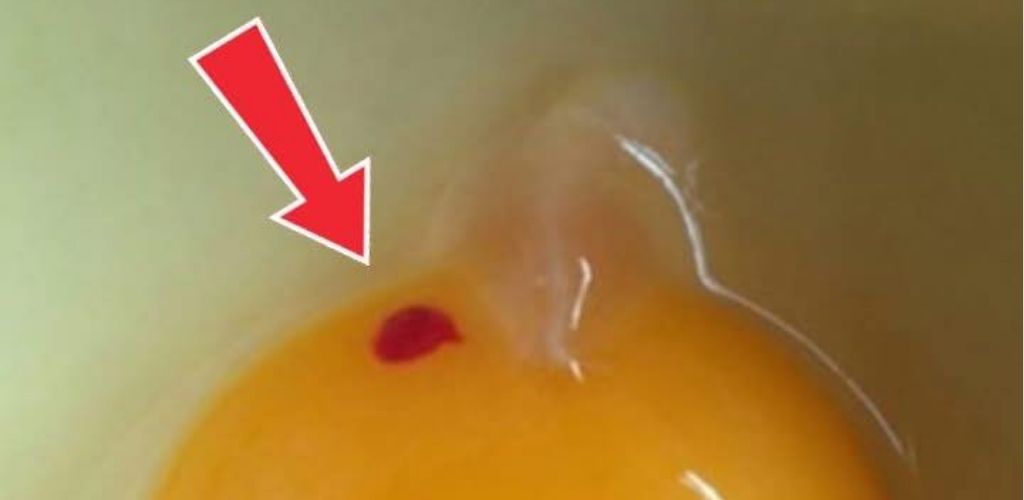
Maybe it’s happened to you: you crack open an egg and suddenly a small red or brownish spot floats in it. Many people are shocked at that moment – is it blood? Is the egg still safe? And should we throw it away?
Let’s explain it calmly, clearly and without unnecessary worries.
Why do red spots appear in an egg?
Small red or darker dots appear when the delicate blood vessels in a hen are slightly damaged during ovulation.
This is a completely natural phenomenon that can occur at the moment when the yolk is released from the ovary, or a little later during its journey through the fallopian tube.
These spots have nothing to do with fertilization – they are not the beginning of the development of the chicken or a sign of the age of the egg.
Is an egg with a blood spot safe?
In most cases, yes.
If the egg smells normal, has a natural color, and is not expired, you can use it without any worries – especially after thorough heat treatment.
The spot:
does not affect the taste,
does not change the nutritional value,
is not a health risk if you cook or fry the egg properly.
If it still bothers you visually, simply remove it with the tip of a knife.
What about brown spots in the egg whites?
This is another common thing – small pieces of tissue that get into the egg during its formation.
They are not harmful to your health and can be removed just like a blood spot.
When should you throw away an egg?
Be careful when:
the egg whites are of unusual colors (pink, green, red),
the egg smells strange,
it is cracked,
there are signs of mold on the shell.
This can signal bacterial contamination, including salmonella.
Why do spots appear more often in homemade eggs?
Supermarket eggs are inspected using a strong light (called candling), which reveals any irregularities.
In homemade or market eggs that have not undergone such inspection, spots sometimes appear more often.
Statistics show that less than 1% of eggs have a blood spot.
How to store eggs correctly?
Always keep store-bought eggs in the refrigerator.
Fresh homemade eggs can be kept at room temperature, as long as your home is cool and dark.
Store them for a maximum of 1 week after cooking.
If you need raw eggs in recipes (e.g. mayonnaise), use pasteurized ones.
And don’t forget to always wash your hands thoroughly after handling eggs.
When can eggs really harm you?
If they are contaminated eggs, you may experience:
vomiting
diarrhea
abdominal pain
fever
general weakness
In this case, seek medical attention and drink plenty of fluids.
Summary
Red or brown dots in eggs are common and harmless.
Don’t be afraid to use them – just follow basic hygiene, cook eggs well and use common sense when assessing freshness.
👉 Follow our page, like 👍, share this article and help spread awareness – it can save your life and that of your loved ones.